
Wrongful Death Claims and Nighttime Pedestrian Accidents
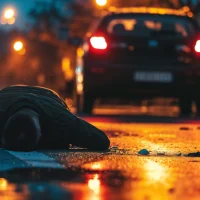
Pedestrian accidents are far more likely to result in fatalities after dark. Reduced visibility, impaired driving, fatigue, speeding, and poor roadway lighting all contribute to the dangers that pedestrians face at night. Even on familiar roads and in marked crosswalks, a moment of driver inattention can have devastating consequences. Our pedestrian accident attorneys at Kalfayan Merjanian, LLP, understand the financial and emotional costs of such a loss, as well as the complex legal issues under California wrongful death law.
For families who lose a loved one in a nighttime pedestrian accident, the emotional shock is often compounded by questions about fault. Insurance companies may quickly argue that darkness made the pedestrian difficult to see or suggest that the victim was somehow responsible for the collision. In many cases, however, the evidence shows that the driver failed to exercise the level of care required under California law. Understanding how liability is determined in nighttime pedestrian fatalities can help families protect their rights and pursue accountability after a preventable tragedy.
Darkness Does Not Eliminate a Driver’s Duty of Care
Some drivers mistakenly believe that reduced visibility excuses a failure to see a pedestrian. California law says otherwise. Motorists have an ongoing obligation to operate their vehicles safely under existing conditions. When visibility is limited by darkness, drivers are expected to adjust their behavior accordingly. That may mean reducing speed, paying closer attention to crosswalks, using high beams when appropriate, and remaining alert to pedestrians who may be crossing the roadway. In many respects, nighttime driving requires more caution than daytime driving, not less. A driver who proceeds at full speed through a poorly lit area while failing to maintain a proper lookout may still be fully responsible for a fatal collision.
Why Are Nighttime Pedestrian Accidents So Deadly?
Several factors combine to make nighttime pedestrian crashes especially dangerous. First, drivers have less time to recognize and react to pedestrians. Headlights illuminate only a limited distance ahead, and visibility may be further reduced by weather conditions, roadway design, or glare from other vehicles. Second, vehicle speeds are often higher at night. Roads may be less congested, causing some drivers to travel faster than they would during the day. Higher speeds dramatically increase both stopping distances and the force of an impact. Finally, alcohol and fatigue frequently play a role in nighttime crashes. Drunk driving and drowsy driving are both more common during evening and overnight hours, creating additional risks for pedestrians.
These factors help explain why pedestrian accidents that occur after dark are disproportionately likely to result in fatalities.
Poor Lighting Can Contribute to Serious Accidents
Street lighting is an important component of pedestrian safety. Poorly illuminated intersections, malfunctioning streetlights, inadequate crosswalk lighting, and dark parking areas can make it harder for drivers to identify pedestrians. In some situations, dangerous roadway conditions may contribute to a fatal accident. However, inadequate or absent lighting does not relieve a driver of responsibility. Motorists are still expected to drive in a manner that accounts for limited visibility. That said, if defective or inadequate lighting played a significant role, public entities or private property owners may also face potential liability. For example, a city that fails to repair malfunctioning streetlights at a known dangerous intersection could become part of a broader investigation into the causes of a fatal pedestrian collision.
Crosswalk Accidents Still Happen After Dark
Many fatal nighttime pedestrian accidents occur in marked crosswalks. Drivers making left turns or right turns may focus on vehicle traffic while overlooking pedestrians who are lawfully crossing the street. Others fail to anticipate that someone may still be in the crosswalk after a traffic signal changes. California law requires drivers to yield to pedestrians in marked and unmarked crosswalks. Darkness does not diminish that responsibility. When a pedestrian is crossing where they are legally permitted to do so, arguments that the driver simply could not see the victim are not likely to eliminate legal responsibility.
Insurance Companies Frequently Shift Blame to the Victim
Nighttime pedestrian cases often involve aggressive defense strategies. Insurance carriers may claim that the pedestrian wore dark clothing, crossed outside a designated crosswalk, or entered the roadway unexpectedly. The goal is frequently to avoid or reduce financial responsibility by arguing that the victim contributed to the accident and should receive less compensation under California’s comparative negligence system, but these arguments are not always justified. Drivers have a duty to remain attentive and operate their vehicles safely under existing conditions. If visibility is poor, the appropriate response is to slow down and exercise greater caution—not to assume that pedestrians will not be present. A thorough investigation often reveals that driver distraction, speeding, impairment, or simple inattention played a much larger role than the defense tries to assert.
The Importance of Evidence in Nighttime Fatality Cases
Determining exactly what happened during a nighttime collision can be challenging, particularly when there are few witnesses. Investigators may rely on several types of evidence, including:
- Surveillance footage from nearby businesses or homes
- Vehicle event data recorders
- Accident reconstruction analysis
- Lighting and visibility studies
- Police reports and witness statements
- Cell phone records showing potential driver distraction
Experts may evaluate sight lines, vehicle speeds, stopping distances, and environmental conditions to determine whether a reasonably attentive driver could have avoided the collision. Preserving this evidence quickly is often essential to building a strong wrongful death case.
Drunk Driving and Nighttime Pedestrian Fatalities
Alcohol impairment remains a leading cause of serious and fatal pedestrian accidents in California. Drivers under the influence experience slower reaction times, impaired judgment, reduced coordination, and diminished awareness of their surroundings. These impairments become even more dangerous when combined with nighttime driving conditions.
Wrongful death claims arising from drunk driving accidents may involve both compensatory damages and, in some circumstances, punitive or exemplary damages designed to punish particularly reckless conduct or serve as examples to others. Families who lose loved ones to impaired drivers frequently seek accountability not only for their own loss but also to discourage similar behavior in the future.
Fatal Accidents in Parking Lots and Commercial Areas
Nighttime pedestrian fatalities are not limited to public roadways. Shopping centers, restaurants, hotels, entertainment venues, and other commercial properties often experience heavy vehicle and foot traffic during evening hours. Poor lighting, inadequate signage, confusing traffic patterns, and distracted drivers can all contribute to deadly accidents. Depending on the circumstances, property owners may share responsibility if dangerous conditions on the premises increase the risk to pedestrians. These cases frequently involve both personal injury principles and premises liability considerations.
The Lasting Impact on Families
The sudden loss of a loved one in a nighttime pedestrian accident affects every aspect of family life. Surviving relatives may face overwhelming grief, financial uncertainty, and the loss of companionship, guidance, and emotional support that their loved one provided. Parents lose children, children lose parents, and spouses lose lifelong partners. California wrongful death laws recognize both the economic and personal dimensions of these losses. While no legal action can reverse a tragedy, pursuing accountability can help families secure financial stability and obtain answers about what happened.
How Kalfayan Merjanian, LLP Helps Families After Fatal Pedestrian Accidents
At Kalfayan Merjanian, LLP, we represent families who have lost loved ones in fatal pedestrian accidents throughout California. Nighttime collisions often require careful investigation into visibility conditions, roadway design, driver conduct, and potential attempts by insurance companies to shift blame onto the victim. Our firm works to preserve critical evidence, identify all responsible parties, and pursue the full measure of compensation available under California law. If your family has lost a loved one in a nighttime pedestrian accident in California, contact Kalfayan Merjanian, LLP to discuss your legal rights and learn how we may be able to help.
