

Chain-Reaction Freeway Crashes in California: How Is Liability Determined?
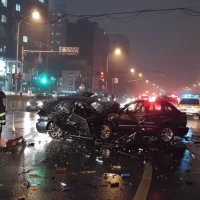
A chain-reaction freeway crash can involve several vehicles, multiple impacts, and drivers who may have very different levels of responsibility. One vehicle may stop suddenly, another may follow too closely, and a third may be unable to avoid the collision because of limited visibility or insufficient stopping distance. In the confusion that follows, determining who caused the crash—and which impacts caused particular injuries—can become complicated.
For people injured in these collisions, identifying every responsible party can be important to pursuing fair compensation. Kalfayan Merjanian, LLP represents people seriously injured in California motor vehicle accidents, including collisions involving multiple vehicles. Understanding how investigators reconstruct a chain-reaction crash can help explain why liability is not always as simple as blaming the driver who caused the first impact.
What Is a Chain-Reaction Freeway Crash?
A chain-reaction crash occurs when an initial collision or sudden traffic event leads to additional impacts involving other vehicles. These crashes are common on busy freeways, where vehicles travel at high speeds and often follow one another closely. When traffic slows unexpectedly, drivers may have only seconds—or less—to react.
For example, a driver may strike a vehicle that has slowed or stopped in traffic. The impact pushes that vehicle into another car, while a driver approaching from behind fails to stop and creates a second collision. A commercial truck may then strike one or more vehicles, causing additional damage and injuries.
Not every chain-reaction crash follows this pattern. Some begin when a vehicle loses control, changes lanes abruptly, or crosses multiple lanes of traffic. Others involve a sudden stop caused by an earlier collision, a disabled vehicle, or an obstacle in the roadway. Weather, poor visibility, road conditions, and excessive speed can contribute to the sequence.
Because several vehicles may be involved, investigators must determine how the collision developed rather than assume that every driver who struck another vehicle was equally responsible.
How Do Investigators Determine the Sequence of Impacts?
Reconstructing the sequence of impacts is one of the most important parts of a chain-reaction crash investigation. Investigators examine physical evidence to determine which vehicles collided first, how the vehicles moved after each impact, and whether later collisions could have been avoided.
Vehicle damage can provide important clues. The location, depth, and direction of damage may help establish whether a vehicle was struck from behind, pushed into another vehicle, or involved in a separate impact. Investigators also examine paint transfers, broken glass, debris, tire marks, and the final resting positions of the vehicles.
The crash scene itself can help establish the sequence. Skid marks, roadway gouges, debris fields, and vehicle positions may indicate where the initial impact occurred and how vehicles moved afterward. Investigators may compare this evidence with photographs, video footage, and witness statements.
Modern vehicles can also contain electronic data that helps explain what happened. Event data recorders, sometimes called vehicle black boxes, can preserve information about vehicle speed, braking, throttle position, and other operating conditions immediately before and during a crash. Not every vehicle records the same information, and the available data depends on the vehicle’s equipment and circumstances. When multiple vehicles are involved, comparing available electronic data can help clarify the timing and sequence of impacts.
Investigators may also review traffic camera footage, nearby business surveillance, dashcam recordings, and information from connected vehicle systems. These sources can be particularly important when the physical evidence does not clearly establish which collision occurred first.
How Does Following Distance Affect Liability?
Following distance is a major issue in many rear-end and chain-reaction freeway crashes. California drivers must maintain a reasonable and prudent distance behind the vehicle in front of them, taking into account their speed, traffic, and roadway conditions.
A driver who follows too closely has less time and space to respond when traffic slows. At freeway speeds, even a brief delay in recognizing a hazard can make the difference between stopping safely and striking another vehicle.
Investigators may consider the distance between vehicles before the collision, traffic speed, braking evidence, road conditions, and whether the driver had a reasonable opportunity to avoid the impact. Witness statements, video footage, and vehicle data can help establish whether a driver was following too closely.
However, a rear-end collision does not mean that the rear driver is responsible for every injury in a chain-reaction crash. The driver in front may have stopped unexpectedly or made an unsafe maneuver, and another driver may have contributed to the collision by speeding or changing lanes abruptly. The full sequence must be examined.
A driver who is struck from behind and pushed into another vehicle may not have caused the second impact through any independent negligent conduct. Determining whether that driver had control over the vehicle or a realistic opportunity to avoid the collision is important when assigning responsibility.
How Do Speed and Visibility Affect a Chain-Reaction Crash Investigation?
Speed can influence both the likelihood of a chain-reaction crash and the severity of the resulting injuries. A driver traveling too fast for traffic or weather conditions has less time to react and needs more distance to stop. Even when a driver is traveling within the posted speed limit, the speed may be unsafe under the circumstances.
Investigators examine vehicle data, skid marks, roadway evidence, surveillance footage, and witness accounts to estimate how fast vehicles were traveling. They may also consider whether drivers reduced their speed as traffic became congested or visibility worsened.
Visibility is another important factor. Fog, rain, darkness, glare, smoke, and heavy traffic can prevent drivers from seeing stopped or slowing vehicles in time. Investigators may review weather reports, roadway lighting, sight distances, and the location of any obstructions.
Limited visibility does not automatically excuse a driver who strikes another vehicle. Drivers are expected to adjust their speed and following distance to account for conditions they can reasonably anticipate. A motorist who continues at highway speed through dense fog or heavy rain may be found negligent if that conduct contributes to a collision.
Investigators also consider whether warning lights, hazard signals, brake lights, or other indicators gave approaching drivers enough notice of a developing danger. If a disabled vehicle or earlier collision created a hazard, the actions taken to warn approaching traffic may become relevant.
Can Multiple Drivers Share Responsibility for a California Chain-Reaction Crash?
Yes. California allows responsibility for an accident to be divided among multiple parties. A negligent driver does not escape liability simply because another person also contributed to the crash.
For example, one driver may cause an initial collision by changing lanes without checking for traffic. A second driver may then strike the resulting obstruction because of excessive speed or inadequate following distance. A third driver may contribute by failing to brake or take reasonable evasive action. Depending on the evidence, each driver could bear a different percentage of responsibility.
A crash victim in California can go after any single defendant for the full amount of economic damages (medical expenses, lost wages) they suffered because of the crash, which can be helpful when one or more parties are uninsured or underinsured. When it comes to non-economic damages (pain and suffering), however, a defendant can only be held accountable for the proportion of damages caused by their negligence. Since non-economic damages can make up a large part of a car accident injury claim, it remains important to investigate the crash and hold each liable party responsible for their share of the blame.
California’s comparative negligence rules also affect compensation. An injured person who is partly responsible for a crash can generally still recover damages, but the amount is reduced by that person’s percentage of fault. For example, if an injured driver is found 20% responsible, the recoverable damages would generally be reduced by 20%.
The allocation of fault depends on the specific conduct of each party and how that conduct contributed to the collision. Simply being involved in a chain-reaction crash does not establish negligence. Investigators must examine whether each driver’s actions fell below the standard of reasonable care and whether those actions contributed to the injuries.
In some cases, parties other than individual drivers may also be responsible. A trucking company, vehicle manufacturer, maintenance provider, or government entity could potentially share liability if its conduct or a dangerous condition contributed to the crash. These claims require separate investigation and proof.
How Do Investigators Determine Which Impact Caused an Injury?
A chain-reaction crash can involve several impacts within a matter of seconds. This creates an important question in injury claims: which collision caused a particular injury, and did multiple impacts contribute to it?
Medical evidence is central to answering this question. Emergency room records, diagnostic imaging, physician evaluations, and follow-up treatment notes can help establish the nature and timing of an injury. Medical professionals may also evaluate whether the forces from one or more impacts caused or aggravated a condition.
For example, a person may initially be struck from behind, then pushed into the vehicle ahead, and finally struck by another approaching vehicle. The person may suffer several injuries, and the forces from multiple impacts may have contributed to the overall harm. It is not always medically possible to attribute every injury to a single impact.
This issue can become more complicated when an injured person has a preexisting condition. California law generally allows an injured person to seek compensation when a crash aggravates an existing injury or medical condition. The fact that someone had a prior back injury, for example, does not automatically prevent recovery for additional harm caused by a chain-reaction collision.
Accurate medical documentation and expert analysis can help connect the crash to the injuries and distinguish new injuries from prior conditions when necessary.
What Evidence Is Important in a Multi-Vehicle Freeway Accident?
Chain-reaction crashes often require more extensive evidence collection than accidents involving only two vehicles. Important evidence may include:
- Police reports, photographs, diagrams, and witness statements documenting the crash scene.
- Vehicle damage assessments, debris patterns, skid marks, and other physical evidence.
- Event data recorder information and available electronic vehicle records.
- Dashcam footage, traffic camera recordings, and nearby surveillance video.
- Medical records, diagnostic imaging, and expert opinions addressing the cause and extent of injuries.
Preserving this evidence promptly is important. Vehicles may be repaired, electronic information may become unavailable, and surveillance recordings may be overwritten. When a commercial truck is involved, additional records such as driver logs, electronic logging device data, vehicle inspection reports, and company safety records may be relevant.
An attorney can send preservation requests, arrange vehicle inspections, and work with qualified accident reconstruction professionals when necessary. These steps can help establish how the crash occurred and whether multiple parties contributed to the injuries.
What Compensation Can Be Available After a California Chain-Reaction Crash?
People injured in chain-reaction freeway crashes can face substantial financial and personal losses, particularly when the collision involves multiple impacts or high-speed vehicles. Depending on the circumstances, recoverable damages can include emergency treatment, hospitalization, surgery, rehabilitation, medication, and future medical expenses.
An injured person may also seek compensation for lost wages, reduced future earning capacity, physical pain, emotional distress, and limitations on everyday activities. When injuries are catastrophic, the claim may need to account for long-term care, assistive equipment, home modifications, and other future needs.
Multiple liable drivers can complicate the insurance process. Each driver may have a separate insurance policy, and the available coverage may not be sufficient to compensate everyone injured in the crash. An investigation may identify additional insurance coverage through commercial policies, umbrella policies, or the injured person’s own uninsured or underinsured motorist coverage.
If a chain-reaction crash results in a fatality, eligible family members may have a wrongful death claim. The personal representative of the deceased person’s estate may also be able to pursue a separate survival action for certain losses the deceased person sustained before death.
How Can Kalfayan Merjanian, LLP Help After a Chain-Reaction Crash?
Determining liability after a multi-vehicle freeway collision requires a detailed investigation. The first driver to cause an impact is not necessarily the only person responsible, and a driver who strikes another vehicle is not automatically liable for every injury that follows. The sequence of impacts, vehicle speeds, following distances, visibility, and conduct of each driver all matter.
Kalfayan Merjanian, LLP represents people seriously injured in California car and truck accidents. The firm’s trial attorneys can investigate complex multi-vehicle collisions, preserve critical evidence, work with accident reconstruction professionals, identify potentially liable parties, and pursue compensation for the full extent of an injured person’s losses.
If you or a loved one has been injured in a chain-reaction freeway crash, contact Kalfayan Merjanian, LLP to discuss the circumstances of the collision and your legal options. A thorough investigation can make a meaningful difference in determining responsibility and protecting your right to pursue compensation.
