

When a Fatal Truck Accident Involves Multiple Liable Parties
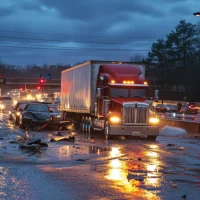
A fatal truck accident can leave a family facing not only the loss of a loved one but also a complicated legal investigation into who was responsible. In many California truck crashes, liability extends beyond the person behind the wheel. A trucking company, vehicle owner, maintenance contractor, shipper, manufacturer, or another party may have caused or contributed to the collision. When a truck accident causes a death, identifying every potentially liable party can be critical to pursuing full compensation for surviving family members.
Kalfayan Merjanian, LLP represents families in serious injury and wrongful death cases throughout California. As California trial attorneys, the firm understands the importance of investigating a fatal truck accident thoroughly and building a case that addresses all of the parties whose conduct may have contributed to a loved one’s death.
Why Can More Than One Party Be Liable for a Fatal Truck Accident?
Commercial trucking involves multiple people and businesses, each with different responsibilities. The driver may be responsible for operating the truck safely, but other parties may have controlled hiring, training, maintenance, loading, scheduling, or the condition of the vehicle.
For example, a trucking company may be liable when a driver causes a crash while performing job duties. But the facts may also reveal that the company hired a driver without adequately checking the driver’s qualifications, failed to provide appropriate training, pressured the driver to violate hours-of-service requirements, or failed to maintain the truck.
In other cases, the trucking company may not be the only business involved. A freight broker may have played a role in selecting a carrier. A maintenance company may have failed to properly repair the truck. A loading company may have improperly secured cargo. A manufacturer may have produced a defective component that contributed to the crash.
The key question in a wrongful death truck accident case is not simply, “Who was driving?” It is whether the conduct or negligence of one or more parties contributed to the collision and resulting death.
When Is a Truck Driver Responsible for a Fatal Crash?
A truck driver can be personally liable when negligent driving causes a fatal accident. Truck drivers have a duty to operate their vehicles safely and comply with applicable traffic laws and commercial-driver requirements.
Potential examples of negligent truck driving include speeding, following too closely, distracted driving, driving while impaired, unsafe lane changes, failing to yield, and driving while fatigued.
Fatigue can be particularly important in commercial trucking cases. Long hours behind the wheel can impair reaction time and judgment. Federal and state regulations limit the amount of time commercial drivers may operate their vehicles, making driver logs and electronic logging device data potentially important evidence after a crash.
However, establishing driver negligence does not necessarily end the investigation. The driver’s employer or another party may also have contributed to the circumstances that led to the crash.
Can a Trucking Company Be Liable for a Truck Driver’s Fatal Crash?
Yes. Depending on the circumstances, a trucking company may be legally responsible for the negligence of an employee who causes a crash while working.
California generally recognizes the doctrine of respondeat superior, under which an employer can be held responsible for an employee’s negligent conduct committed within the scope of employment. Trucking companies can also face direct liability based on their own conduct.
For example, a trucking company could potentially face claims involving negligent hiring, retention, training, supervision, or vehicle maintenance. If a company knew or should have known that a driver presented a safety risk and nevertheless allowed that driver to operate a commercial vehicle, those facts may become important in a wrongful death case.
The employment relationship itself can also require careful investigation. A trucking company may characterize a driver as an independent contractor rather than an employee. That classification does not automatically resolve every potential liability issue. The actual relationship between the parties and the circumstances surrounding the driver’s work may matter.
Could a Truck Owner or Maintenance Company Be Liable?
The company operating a truck is not necessarily the same entity that owns or maintains it. Commercial vehicles can involve multiple businesses, and maintenance responsibilities may be divided among them.
A defective brake system, worn tire, steering problem, improperly repaired suspension component, or other mechanical defect can cause a catastrophic crash. If inadequate maintenance contributed to the accident, the company or contractor responsible for maintaining the vehicle may potentially be liable.
Maintenance records can therefore be critical evidence. Investigators may need to determine when the truck was inspected, what repairs were performed, whether problems had previously been reported, and whether the vehicle was placed back into service despite known safety issues.
Preserving the truck itself can also be extremely important. Once a commercial vehicle is repaired, altered, or destroyed, physical evidence that could help establish what happened may be lost.
Can a Trucking Company Be Liable for Improperly Loaded Cargo?
Improperly loaded or secured cargo can create serious dangers for everyone sharing the road.
Cargo that shifts during transit can affect a truck’s center of gravity and handling. An improperly secured load can fall from a trailer, create an obstruction, or contribute to a rollover. In some circumstances, responsibility for loading the cargo may belong to a shipper, warehouse, loading company, trucking company, or another party.
Determining liability requires examining who was responsible for loading and securing the particular cargo, what instructions were provided, and whether the cargo was loaded in compliance with applicable requirements.
A wrongful death investigation should therefore look beyond the collision itself and examine the entire chain of events that put the truck on the road.
What If a Defective Truck Part Caused the Fatality?
A manufacturer or distributor may potentially be liable when a defective truck component causes or contributes to a fatal crash.
Product liability claims can involve defective brakes, tires, steering components, suspension parts, trailer components, or other equipment. A defect may have existed when the component was manufactured, or a product may have been improperly designed or marketed.
In some cases, a recall may provide important evidence that a particular component presented a safety problem. However, the absence of a recall does not necessarily mean that a product could not have been defective.
A thorough investigation may involve examining the truck and its components, maintenance records, repair history, recall information, accident reconstruction evidence, and expert analysis.
How Does California Determine Responsibility When Multiple Parties Are at Fault?
California law permits responsibility for an injury to be divided among multiple parties based on their respective shares of fault. This can become particularly important in a fatal truck accident involving several negligent parties.
For example, suppose a truck driver was speeding, the trucking company failed to maintain the vehicle properly, and a defective component also contributed to the collision. The facts may support claims against multiple defendants rather than forcing the family to identify one person or company as solely responsible.
California’s comparative negligence and allocation-of-fault rules can make the legal analysis complicated. The precise consequences depend on the claims being pursued, the type of damages involved, and the parties found responsible.
That is one reason a wrongful death case involving a commercial truck often requires more than simply obtaining the police report and filing a claim with the trucking company’s insurer.
Why Is Evidence So Important in a Multiple-Liability Truck Accident?
Commercial trucking cases can generate substantial amounts of evidence. Much of that evidence may be controlled by trucking companies, insurers, maintenance providers, or other businesses involved in the shipment.
Potential evidence can include electronic logging data, GPS information, onboard computer data, driver qualification records, drug and alcohol testing records, maintenance and inspection records, dispatch communications, cargo documents, bills of lading, surveillance footage, photographs, witness statements, and the truck itself.
Some evidence can also disappear quickly. Surveillance footage may be overwritten, vehicles may be repaired, and electronic data may not be retained indefinitely. A prompt investigation can therefore make a significant difference in determining what happened and which parties may be responsible.
What Damages Can Families Recover After a Fatal Truck Accident?
A California wrongful death claim may allow eligible surviving family members to seek compensation for damages resulting from the loss of their loved one. Depending on the circumstances, recoverable damages can include certain financial losses associated with the decedent’s death, loss of financial support, loss of companionship, and other legally recognized losses.
A fatal truck accident can also create significant financial consequences for a family. The deceased person’s expected contributions to the household may have included income, benefits, household services, and other forms of support.
The specific damages available depend on California law and the circumstances of the surviving family members. Multiple liable parties may also affect how claims are pursued and how responsibility for damages is allocated.
How Can a Wrongful Death Lawyer Investigate Multiple Liable Parties?
A wrongful death truck accident investigation should begin with determining how the crash occurred and then working backward to identify every person or business whose conduct may have contributed to it.
That may require examining the driver’s conduct, the trucking company’s practices, the truck’s maintenance history, cargo loading procedures, ownership arrangements, contractual relationships, and the condition of relevant vehicle components. Accident reconstruction experts, trucking industry experts, medical professionals, economists, and other professionals may be needed depending on the circumstances.
Importantly, the goal is not simply to identify as many defendants as possible. Each potential defendant should be evaluated based on the evidence and the legal basis for liability. A carefully developed case can help ensure that responsibility is addressed based on what the evidence actually shows.
Contact Kalfayan Merjanian, LLP After a Fatal Truck Accident in California
When a loved one dies in a truck accident, determining who is responsible can require a far more extensive investigation than an ordinary traffic collision. The driver may be only one part of the story. Trucking companies, vehicle owners, maintenance providers, cargo handlers, manufacturers, and other parties may potentially share responsibility depending on the facts.
Kalfayan Merjanian, LLP is a California trial attorney law firm that regularly litigates serious injury and wrongful death cases in California courtrooms. If your family has lost someone in a fatal truck accident, contact Kalfayan Merjanian, LLP to discuss the circumstances of the crash, identify potentially responsible parties, and determine what legal options may be available.
