

When Commercial Drivers Cause Fatal Accidents: Wrongful Death Claims Against Trucking and Delivery Companies
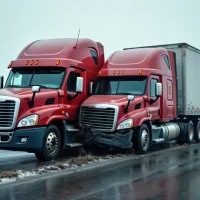
Commercial vehicles are a constant presence on California roads. Tractor-trailers transport goods throughout the state, delivery vans make thousands of stops each day, and commercial drivers travel millions of miles every year. Most do so safely. However, when a commercial vehicle is involved in a fatal accident, the consequences can be devastating.
Unlike an ordinary car accident, a collision involving a commercial vehicle often raises questions that extend far beyond the actions of the driver behind the wheel. Was the driver properly trained? Was the company pushing unrealistic delivery schedules? Did the employer ignore safety violations? Was the vehicle properly maintained? Did corporate policies contribute to the crash?
When a loved one is killed in a truck accident or collision involving a commercial vehicle, surviving family members may have the right to pursue a wrongful death claim against not only the driver, but also the company that employed them and other responsible parties.
Why Are Commercial Vehicle Accidents Likely to Be Fatal?
The size and weight of commercial vehicles significantly increase the likelihood of catastrophic injuries and fatalities. A fully loaded tractor-trailer can weigh up to 80,000 pounds, dwarfing the weight of a typical passenger vehicle. Even smaller commercial vehicles, such as delivery vans, utility trucks, and work vehicles, can cause severe damage when involved in higher-speed collisions. Commercial drivers also spend far more time on the road than most motorists. More time behind the wheel means greater
exposure to traffic hazards, fatigue, weather conditions, and driver error. When a collision occurs, the resulting investigation often focuses on both the driver’s conduct and the company’s safety practices.
Is the Employer Responsible for the Driver’s Negligence?
In many cases, yes. California law generally holds employers responsible for the negligent acts of employees committed within the course and scope of their employment. This legal principle recognizes that companies should bear responsibility for risks created by their business operations. For example, if a delivery driver causes a fatal collision while making deliveries for an employer, the company may be legally responsible for the resulting damages. This can be important because commercial employers often carry substantially larger insurance policies than individual drivers.
What Is the Difference Between Driver Negligence and Corporate Negligence?
Some wrongful death cases focus solely on the actions of the driver. Others reveal broader failures by the company itself. A driver may cause a fatal accident by speeding, driving while distracted, following too closely, making an unsafe lane change, or violating traffic laws. In those situations, the driver’s negligence may be the primary issue. However, an investigation may uncover evidence that the company contributed to the crash through its own conduct. Corporate negligence claims often focus on company decisions, policies, and safety practices that created unreasonable risks.
Can a Company Be Liable for Hiring the Wrong Driver?
Absolutely. Commercial carriers have a responsibility to hire qualified drivers who can safely operate the vehicles entrusted to them. A company may face liability if it hires or retains a driver despite evidence of serious safety concerns, such as:
- A history of reckless driving violations
- Prior DUI convictions
- Repeated preventable accidents
- License suspensions
- Poor safety records
- Known substance abuse issues
In some cases, company records reveal that warning signs existed long before the fatal collision
occurred. When employers ignore those warning signs, they may share responsibility for the harm that
follows.
Why Are Hours-of-Service Violations So Important?
Driver fatigue is one of the most significant safety concerns in the commercial transportation industry. Federal regulations limit the number of hours many commercial truck drivers can operate before taking required rest breaks. These hours-of-service rules are intended to reduce fatigue-related crashes and improve roadway safety. Unfortunately, violations still occur.
A fatigued driver may experience slower reaction times, reduced awareness, impaired judgment, and even microsleep episodes lasting several seconds. At highway speeds, a few seconds of inattention can be deadly. In some wrongful death cases, investigators discover that drivers exceeded allowable driving limits, falsified logs, ignored rest requirements, or were pressured by employers to meet unrealistic delivery deadlines. These facts can become powerful evidence in litigation.
How Do Delivery Schedules Contribute to Fatal Accidents?
The modern economy places enormous pressure on transportation and delivery companies. Consumers expect rapid deliveries. Businesses demand efficiency. Drivers are often expected to complete numerous deliveries within limited timeframes. While productivity is important, safety must come first. When companies establish unrealistic schedules, drivers may feel pressured to speed, skip breaks, rush through intersections, or continue driving while fatigued. An investigation may reveal that corporate expectations created conditions that made a serious accident more likely.
What Happens When Poor Vehicle Maintenance Causes a Crash?
Commercial vehicles require ongoing inspection, maintenance, and repair. Brake systems, tires, steering components, lights, mirrors, and other safety-related equipment must be kept in proper working order. Mechanical failures can have catastrophic consequences when they occur at highway speeds. Some fatal accidents result from issues such as worn brakes, tire blowouts, defective lighting systems, steering failures, or improperly maintained equipment. Maintenance records often become critical evidence in these cases. Investigators may examine inspection reports, repair histories, service schedules, and company maintenance practices to determine whether preventable mechanical problems contributed to the collision.
Who Else May Be Responsible Besides the Driver and Employer?
Commercial vehicle accident cases frequently involve multiple parties. Depending on the circumstances, liability may extend to maintenance contractors, cargo-loading companies, vehicle manufacturers, parts manufacturers, brokers, or other entities involved in transportation operations. For example, improperly loaded cargo can shift during transit and cause a driver to lose control. A defective tire or brake component may contribute to a fatal collision. A maintenance company may fail to identify dangerous
mechanical issues during inspections. Identifying all potentially responsible parties is often an important part of maximizing recovery for surviving family members.
Why Is Evidence Preservation So Critical?
Commercial vehicle cases often involve evidence that does not exist in ordinary automobile accidents. Many trucks contain electronic control modules and event data recorders that capture information regarding speed, braking, throttle position, and other operational data. Some fleets utilize GPS tracking systems, onboard cameras, electronic logging devices, and dispatch communications that can provide valuable information about driver activity. Key evidence may include:
- Driver qualification files
- Hours-of-service logs
- Dispatch records
- Vehicle inspection reports
- Maintenance records
- Electronic data downloads
Much of this evidence is controlled by the company itself. Prompt action may be necessary to ensure that important records are preserved.
Why Do Commercial Vehicle Cases Often Involve Larger Insurance Policies?
Federal regulations and industry practices often require commercial carriers to maintain insurance coverage significantly greater than the minimum limits applicable to private motorists. The exact amount depends on the nature of the business, the type of vehicle involved, and other regulatory requirements. This larger insurance coverage exists because commercial vehicles have the potential to cause severe injuries and fatalities. When a family loses a loved one in a commercial vehicle collision, the available insurance coverage may play an important role in ensuring adequate compensation. However, larger policies also mean insurers frequently defend these cases aggressively. Insurance companies may deploy accident reconstruction experts, trucking consultants, investigators, and defense attorneys in an effort to limit liability and reduce payouts.
How Are Wrongful Death Damages Calculated?
Every family experiences loss differently, but California law recognizes that surviving family members may suffer both economic and non-economic harm after a fatal accident. Economic losses may include the financial support the deceased would likely have provided, while non-economic damages often involve the loss of companionship, care, guidance, affection, and emotional support. When a parent,
spouse, or primary wage earner is killed, the effects can extend for decades into the future. A thorough evaluation of damages often requires careful analysis of the deceased’s earnings, career trajectory, household contributions, and role within the family
Looking Beyond the Driver
One of the most important aspects of commercial vehicle wrongful death litigation is recognizing that the driver may not be the only responsible party. Serious accidents are sometimes the result of larger systemic failures involving hiring decisions, inadequate supervision, unsafe scheduling practices, maintenance deficiencies, or corporate policies that prioritize productivity over safety. By examining the full picture, investigators can often uncover evidence that would otherwise remain hidden.
How Kalfayan Merjanian, LLP Helps Families After Fatal Commercial Vehicle Accidents in California
At Kalfayan Merjanian, LLP, we understand that commercial vehicle wrongful death cases require a thorough and aggressive investigation. Our firm examines driver conduct, company records, maintenance histories, electronic data, regulatory compliance, and other evidence to identify all responsible parties. When trucking companies, delivery services, or other commercial operators place unsafe vehicles or drivers on California roads, families deserve answers and accountability. If you have lost a loved one in a fatal truck accident or commercial vehicle collision, contact Kalfayan Merjanian, LLP to learn more about your legal rights and the options available to your family.
