

The Role of Expert Witnesses in Wrongful Death Cases
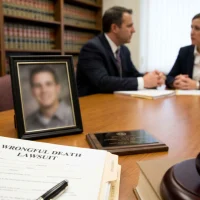
When someone dies because of another person’s negligence, the evidence in a wrongful death case may need to answer difficult questions about what happened, why it happened, and what the surviving family members lost as a result. Witnesses who saw an accident can provide important firsthand observations, but they may not be able to explain the technical or financial issues that arise in a serious wrongful death claim.
Expert witnesses can help fill those gaps.
Depending on the circumstances, a wrongful death case may involve an accident reconstruction expert, medical experts, an economist, a vocational expert, a forensic accountant, or other specialists with knowledge relevant to the particular case. Their opinions can help attorneys, insurers, judges, and juries understand evidence that requires technical, scientific, medical, or economic expertise.
In California, wrongful death damages can include financial support the decedent would have provided, lost gifts or benefits, funeral and burial expenses, and the reasonable value of household services the decedent would have provided. Depending on the circumstances, surviving family members may also seek compensation for the loss of the decedent’s love, companionship, comfort, care, assistance, protection, affection, society, and moral support.
Expert testimony can be important in establishing both the circumstances of the death and the magnitude of the losses that followed.
What Does an Expert Witness Do in a Wrongful Death Case?
An expert witness provides specialized knowledge that can help explain evidence or reach conclusions that would not ordinarily be available to a juror simply from personal experience.
The role of an expert depends on the person’s field.
An accident reconstruction expert might analyze vehicle damage, roadway evidence, electronic data, photographs, video, and other evidence to determine how a collision occurred. A medical expert might explain the cause of death or whether a particular injury or medical condition resulted from the defendant’s conduct. An economist might calculate the financial support the decedent would likely have provided to surviving family members.
The expert does not decide who should win the case. Instead, the expert provides opinions within the expert’s area of knowledge, based on the evidence and applicable methodology.
Not every wrongful death case requires every type of expert. The appropriate experts depend on the circumstances of the death, the liability issues, the nature of the damages, and the evidence available.
How Can an Accident Reconstruction Expert Help?
Accident reconstruction can be particularly important when a wrongful death results from a car, motorcycle, truck, pedestrian, or other type of car accident.
An accident reconstruction expert may examine the physical evidence to determine how the collision occurred. Depending on the case, that analysis can involve vehicle damage, skid marks, vehicle positions, roadway measurements, surveillance footage, event data recorder information, photographs, witness statements, traffic signals, and other evidence.
The expert may analyze questions such as whether a vehicle was speeding, whether a driver had sufficient time to react, where the vehicles were positioned before impact, and whether braking or evasive action could have avoided the collision.
For example, a driver may claim that a pedestrian suddenly entered the roadway and that there was no opportunity to avoid the collision. Accident reconstruction evidence might provide a different perspective by examining the driver’s speed, sight distance, braking, roadway conditions, and available reaction time.
In a wrongful death case, establishing how the accident happened can be fundamental to establishing negligence and causation.
What Role Do Medical Experts Play?
Medical experts can address both the cause of death and the relationship between an accident or other wrongful act and the death.
In some cases, the cause of death is relatively straightforward. In others, multiple medical conditions or injuries may make causation more complicated.
A medical expert may review medical records, imaging, laboratory results, emergency treatment records, surgical records, autopsy findings, and other evidence. The expert may explain the nature and severity of the injuries and whether those injuries caused or contributed to the death.
Medical testimony can also be important when the defendant argues that the decedent’s death resulted from a preexisting condition rather than the defendant’s conduct.
For example, an accident might cause serious trauma to a person who already had cardiovascular disease. If the defense argues that the underlying condition was responsible for the death, medical experts may be needed to evaluate whether the accident caused the fatal injuries, triggered a medical event, or substantially contributed to the death.
The precise medical questions vary substantially from case to case.
Can Medical Experts Explain What Happened Before Death?
In some wrongful death cases, the circumstances between the injury and death are themselves important.
A person may survive an accident for hours, days, or weeks before ultimately dying from complications. Medical experts may be able to explain the progression from the original injury to the eventual death.
Their testimony may address emergency treatment, surgical complications, infections, organ failure, brain injury, respiratory problems, or other medical developments.
This evidence can help establish whether the original incident remained a substantial factor in causing the person’s death.
It may also help explain the seriousness of the injuries to family members and others who need to understand what happened medically.
Why Might a Wrongful Death Case Need an Economist?
An economist can help calculate the financial losses associated with the death.
California wrongful death damages may include the financial support that the decedent would have contributed to the family during the applicable life expectancy. They can also include the value of gifts or benefits the plaintiff reasonably expected to receive and the value of household services the decedent would have provided.
Determining those losses can require considerably more than simply looking at the decedent’s last paycheck.
An economist may consider income history, employment benefits, expected raises, career progression, retirement benefits, work-life expectancy, inflation, taxes, and other economic factors supported by the evidence.
Future economic losses also require consideration of the period over which those losses would have occurred. California’s wrongful death instructions recognize the importance of life expectancy in evaluating certain damages.
The purpose of an economist’s analysis is to provide a reasoned calculation rather than asking a jury to speculate about what the family might have received in the future.
What Does a Vocational Expert Contribute to a California Wrongful Death Case?
A vocational expert can provide information about the decedent’s occupation, skills, employment history, and likely career trajectory.
This can be particularly useful when the decedent was relatively young or had significant potential for future advancement.
For example, a person’s current salary may not accurately represent what that person would have earned over the remainder of an expected working life. A vocational expert may analyze the person’s education, training, work history, occupational skills, and career path to help establish what employment opportunities would reasonably have been available.
The vocational analysis can then provide information that an economist uses in calculating future economic losses.
This type of evidence can be especially important when the decedent was self-employed, was changing careers, had recently entered a profession, or had earnings that varied substantially from year to year.
When Is a Life-Care or Household Services Expert Useful?
The economic value of a person’s contributions to a household is not necessarily limited to a paycheck.
California’s wrongful death damages framework recognizes the reasonable value of household services the decedent would have provided.
A person may have provided childcare, cooking, transportation, home maintenance, household management, assistance with family members, or other services without receiving a separate wage for that work.
Depending on the circumstances, an expert may help estimate the economic value of those services.
This can be particularly important when the decedent was a stay-at-home parent or when the person’s household contributions were substantial even though they did not appear in employment or income records.
Could a Forensic Accountant Be Important to a Wrongful Death Claim?
A forensic accountant may be useful when the decedent owned a business, had complicated investments, was a partner in a business, or received income from multiple sources.
Deceased business owners and self-employed individuals can present unique challenges in calculating lost financial support.
Business revenue is not necessarily equivalent to personal income. An expert may need to distinguish between business expenses, compensation, distributions, retained earnings, and other financial components.
A forensic accountant may analyze tax returns, financial statements, payroll records, bank records, business records, and other documentation to help establish the decedent’s actual financial circumstances.
The analysis may then be used alongside vocational and economic evidence to evaluate the financial losses suffered by surviving family members.
Can Experts Help Establish the Value of Noneconomic Losses?
Wrongful death damages also include noneconomic losses recognized by California law, such as the loss of the decedent’s love, companionship, comfort, care, assistance, protection, affection, society, and moral support.
These losses are fundamentally different from lost wages or medical expenses. There is no invoice establishing the dollar value of a spouse’s companionship or a parent’s guidance.
Evidence concerning the relationship between the decedent and surviving family members can therefore be important.
Family members, friends, coworkers, and others who knew the family may provide firsthand testimony about the relationship, the decedent’s role in the household, and the ways the death changed the survivors’ lives.
Experts may sometimes have a role in explaining particular aspects of these losses, but the evidence does not necessarily require an expert to establish every component of noneconomic damages. The family’s firsthand evidence can be highly significant.
How Do Different Experts Work Together?
The strongest expert evidence in a wrongful death case is not necessarily a collection of unrelated opinions. Different experts may address different parts of the same factual chain.
Consider a fatal truck collision.
An accident reconstruction expert might establish the truck’s speed and braking behavior. A human-factors expert might analyze driver perception and reaction. A medical expert might establish that the collision caused the fatal injuries. A vocational expert might analyze the decedent’s career and future employment prospects. An economist might use that information to calculate projected financial losses.
Each expert addresses a different question.
Together, their testimony can help establish a coherent sequence: what happened, why it happened, how the defendant’s conduct caused the death, and what the surviving family members lost as a result.
What Evidence Do Experts Review?
Expert opinions are only as useful as the evidence on which they are based.
Depending on the case, experts may review police reports, photographs, surveillance footage, vehicle data, electronic records, medical records, autopsy reports, employment records, tax returns, financial statements, school records, personnel files, and other documentation.
Accident reconstruction experts may inspect vehicles or the accident scene. Medical experts may review the complete medical history rather than isolated treatment notes. Economists may examine years of financial and employment information.
This is one reason preserving evidence promptly after a death can be so important.
Physical evidence can be repaired, discarded, destroyed, or altered. Electronic records may become more difficult to obtain. Witness memories can change over time. Financial and employment records may require time to collect and analyze. Early preparation helps collect and preserve the best evidence to build a strong case.
Can Expert Testimony Be Challenged?
An expert’s credentials alone do not establish that the expert’s opinion is correct. The underlying evidence and methodology matter, and an opposing party can challenge an expert’s qualifications, methodology, assumptions, factual basis, or conclusions.
For example, an insurer or defense attorney may argue that an economist assumed an unrealistic career path, that a medical expert failed to account for a preexisting condition, or that an accident reconstruction expert relied on incomplete physical evidence.
These challenges are one reason expert analysis should be based on reliable evidence and carefully reasoned assumptions.
A well-prepared expert should be able to explain not only the conclusion but also how the expert reached it.
How Can Expert Witnesses Strengthen a Wrongful Death Case?
Expert witnesses can translate complicated evidence into information that can be evaluated in a legal proceeding.
They may help establish liability, explain medical causation, calculate financial losses, reconstruct an accident, or evaluate the long-term consequences of the decedent’s death.
But expert testimony is only one component of a wrongful death case. Witness testimony, documents, photographs, physical evidence, electronic records, medical records, and financial information may all contribute to establishing the claim.
California’s official civil jury instructions recognize wrongful death as a statutory claim and identify the categories of damages that may be available. They also emphasize that damages cannot be based on speculation or guesswork.
Expert analysis can help provide the evidentiary foundation necessary to make complicated losses understandable and supported by evidence.
When Should a Family Consider Expert Witnesses?
A wrongful death claim can involve difficult questions that are not easily answered by ordinary testimony. When liability is disputed, the cause of death is medically complicated, or the financial losses extend far into the future, expert analysis may be particularly valuable.
Kalfayan Merjanian, LLP can investigate a wrongful death claim and determine what types of expert testimony may be appropriate. Depending on the circumstances, that investigation may involve accident reconstruction professionals, medical experts, economists, vocational experts, forensic accountants, or other professionals whose knowledge can help establish the family’s losses and the circumstances that caused the death.
The goal is not simply to retain as many experts as possible. It is to identify the questions that need to be answered and obtain reliable evidence addressing those questions.
A wrongful death leaves a family with losses that cannot be undone. When another person’s negligence caused the death, establishing responsibility may require a detailed investigation that combines eyewitness testimony, documentary evidence, physical evidence, and expert analysis.
If you have lost a loved one because of someone else’s negligence in California, contact Kalfayan Merjanian, LLP to discuss the circumstances of the death and the evidence that may support a wrongful death claim.
