

Rear-End Collisions That Cause Catastrophic Injuries
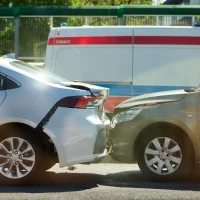
Many people think of rear-end collisions as relatively minor accidents that result in little more than a damaged bumper and a sore neck. While low-speed crashes certainly occur every day, some rear-end collisions are among the most violent and devastating accidents on California roads. When a vehicle strikes another at highway speeds or when multiple vehicles become involved in a chain-reaction crash, the consequences can be life-changing.
High-energy rear-end collisions can leave victims with traumatic brain injuries (TBIs), spinal cord damage, multiple fractures, internal injuries, and permanent disabilities. These cases involve extensive medical treatment, lengthy rehabilitation, and significant financial losses that continue for years after the crash. The California car accident lawyers at Kalfayan Merjanian, LLP, understand how catastrophic rear-end accidents occur and the challenges crash victims face in proving just how severely they were injured. We put our years of experience and dedication toward helping people get the care and compensation they need and deserve whenever they have been seriously hurt by a negligent driver on California roads.
Why Some Rear-End Collisions Are So Severe
The severity of a rear-end collision depends on far more than whether one vehicle struck another from behind. Impact speed, vehicle size, seat position, restraint systems, and whether additional collisions occur all influence the forces placed on the occupants. A compact car struck by a fully loaded commercial truck at freeway speeds experiences dramatically different forces than a vehicle bumped in slow-moving traffic. Modern vehicles include many important safety features, but even advanced airbags and seat belts cannot eliminate the tremendous energy generated during high-speed impacts. When that force is transferred to the occupants, catastrophic injuries can occur within fractions of a second.
Common Causes of Serious Rear-End Collisions in California
Although every accident is different, many catastrophic rear-end crashes involve driver negligence. Some of the most common causes include distracted driving, speeding, impaired driving, following too closely, driver fatigue, poor weather conditions, and failure to recognize slowing or stopped traffic ahead. Commercial truck crashes deserve particular attention because the weight of a tractor-trailer dramatically increases the force of impact. A fully loaded truck that fails to stop in time can push multiple vehicles into one another, creating a chain-reaction collision involving numerous victims.
Spinal Cord Injuries Can Change Lives Forever
The spine absorbs enormous forces during a violent rear-end collision. Victims may suffer herniated discs, fractured vertebrae, spinal instability, nerve compression, or complete spinal cord injuries. In the most severe cases, damage to the spinal cord can result in partial or complete paralysis. Even injuries that do not involve paralysis may require surgery, spinal fusion procedures, pain management, physical therapy, and long-term rehabilitation. Many individuals are unable to return to the same occupation or enjoy the activities they participated in before the accident. Because spinal injuries often produce lifelong consequences, accurately evaluating future medical needs is an important part of any catastrophic injury claim.
Traumatic Brain Injuries Are Not Always Immediately Obvious
A traumatic brain injury does not require a direct blow to the head. During a rear-end collision, the brain may move violently inside the skull as the head rapidly accelerates and decelerates. These forces can damage brain tissue even when there is no visible head wound. Symptoms may include headaches, dizziness, memory loss, difficulty concentrating, vision problems, mood changes, sleep disturbances, and cognitive impairment. More severe TBIs can lead to permanent neurological deficits requiring lifelong care. Because some symptoms develop gradually over hours or days, obtaining prompt medical evaluation after a serious rear-end collision is essential.
Chain-Reaction Crashes Often Produce Multiple Catastrophic Injuries
Some of the most devastating rear-end collisions occur when one impact triggers a series of additional crashes. For example, a distracted or speeding driver may strike the rear of one vehicle, forcing it into another vehicle ahead, which then collides with additional vehicles. Occupants may experience multiple impacts from different directions within seconds. These multi-vehicle collisions often produce especially severe injuries because victims are subjected to repeated acceleration and deceleration forces. Determining liability can also become considerably more complicated, particularly when several drivers share responsibility for the sequence of events.
Serious Rear-End Collisions Can Cause More Than Neck Injuries
While whiplash is frequently associated with rear-end crashes, catastrophic collisions often produce far more extensive trauma. Victims may suffer broken ribs, pelvic fractures, crushed limbs, internal organ injuries, lung damage, severe facial trauma, shoulder injuries, knee injuries, and chronic pain conditions. Many injuries require multiple surgeries followed by months or even years of rehabilitation. In catastrophic cases, families may also face the emotional and financial burden of providing long-term assistance to a loved one who can no longer live independently.
Proving the Full Extent of Catastrophic Injuries
Insurance companies often acknowledge that a rear-end collision occurred but dispute the seriousness of the resulting injuries. Adjusters may argue that the victim had pre-existing spinal degeneration, prior neck problems, or unrelated medical conditions. They may also question whether future medical treatment is truly necessary or whether permanent disability is as significant as claimed. Building a strong catastrophic injury case often requires testimony from treating physicians, neurologists, neurosurgeons, orthopedic surgeons, rehabilitation specialists, life-care planners, vocational experts, and economists. Together, these professionals help explain not only how the injuries occurred but also how they will affect the victim for the rest of their life.
Determining Liability in Multi-Vehicle Crashes
Although the rear driver is frequently at fault, liability is not always as straightforward as many people assume. A chain-reaction collision may involve multiple negligent drivers, unsafe lane changes, defective vehicle components, commercial trucking companies, hazardous roadway conditions, or mechanical failures. California follows a comparative negligence system, meaning fault may be allocated among multiple parties depending on the evidence. A thorough investigation often includes reviewing police reports, surveillance footage, dash camera recordings, electronic vehicle data, witness statements, and accident reconstruction analyses to determine exactly how the collision unfolded.
Recovering Compensation After a Catastrophic Rear-End Collision
Victims of catastrophic rear-end accidents may be entitled to substantial compensation when another party’s negligence caused their injuries. Depending on the circumstances, damages may include past and future medical expenses, lost income, diminished earning capacity, rehabilitation costs, home modifications, long-term nursing care, pain and suffering, emotional distress, and compensation for permanent disability or disfigurement. If the collision results in a fatality, eligible surviving family members may also pursue a wrongful death claim under California law. Because catastrophic injury cases frequently involve significant future losses, accurately calculating damages is just as important as proving liability.
Why Early Investigation Matters
Evidence following a serious rear-end collision can disappear quickly. Electronic data stored in vehicles may be overwritten. Commercial trucking records may not be preserved indefinitely. Surveillance footage may be automatically deleted, and witness memories become less reliable over time. Prompt legal representation allows an attorney to preserve critical evidence, retain appropriate experts, document injuries, and begin building a comprehensive case before important information is lost. Early action also helps ensure that victims receive guidance while they focus on their physical recovery.
Kalfayan Merjanian, LLP Represents Victims of Catastrophic Car Accidents in California
At Kalfayan Merjanian, LLP, we understand that a catastrophic rear-end collision can permanently alter every aspect of a person’s life. Our firm conducts detailed investigations, works with highly qualified medical and accident reconstruction experts when appropriate, and aggressively pursues compensation that reflects the true extent of our clients’ injuries and future needs. If you or a loved one has suffered a traumatic brain injury, spinal cord injury, or other severe harm in a rear-end collision, contact Kalfayan Merjanian, LLP to discuss your legal rights and learn how we may be able to help.
