

Fatal Pedestrian Accidents Caused by Failure to Yield at Crosswalks
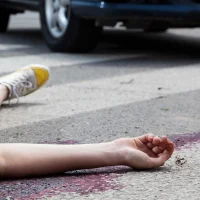
Crosswalks are intended to provide pedestrians with a safe place to cross the street, yet far too many fatal accidents occur because drivers fail to yield the right-of-way. Whether the collision happens at a busy intersection, a neighborhood crossing, or near a school zone, these tragedies are often entirely preventable.
California law imposes clear responsibilities on motorists when approaching pedestrians in both marked and unmarked crosswalks. When drivers ignore those obligations, surviving family members may have the right to pursue wrongful death claims and seek accountability for the devastating losses they have suffered.
At Kalfayan Merjanian, LLP, our California trial attorneys help families of fatal pedestrian accident victims seek justice and accountability for the wrongful death of a loved one. Understanding the rules that govern crosswalks—and the evidence used to prove violations—can help families better understand their legal rights after a fatal pedestrian accident.
California Law Requires Drivers to Yield to Pedestrians
California Vehicle Code section 21950 requires drivers to yield the right-of-way to pedestrians crossing the roadway within marked crosswalks and within unmarked crosswalks at intersections. The law also requires motorists to exercise due care for pedestrian safety. Drivers must remain vigilant, reduce speed when necessary, and take reasonable precautions to avoid striking someone in the roadway.
Pedestrians likewise have responsibilities under California law and may not suddenly leave a curb or place of safety and walk into the immediate path of a vehicle when doing so creates an unavoidable hazard. However, many fatal crosswalk accidents occur because drivers simply fail to see or yield to pedestrians who are lawfully crossing the street. A violation of the right-of-way rules can become powerful evidence in a wrongful death case.
What Is an Unmarked Crosswalk?
Many people assume that crosswalks only exist where painted lines appear on the pavement. California law recognizes unmarked crosswalks as well.
An unmarked crosswalk generally exists at most intersections where sidewalks meet, even if there are no painted stripes or pedestrian signs. Drivers approaching these intersections must still be alert to pedestrians and yield when required.
Insurance companies sometimes argue that a pedestrian was crossing outside a designated area when, in reality, the person was lawfully using an unmarked crosswalk. A careful investigation into the roadway layout and applicable traffic rules is often necessary to address these disputes.
Why Do Drivers Fail to Yield?
Several factors commonly contribute to fatal crosswalk accidents. Distracted driving remains one of the leading causes. Drivers who are texting, adjusting navigation systems, or otherwise taking their attention away from the road may overlook pedestrians until it is too late. Left-turn and right-turn movements also create significant risks. Motorists frequently focus on gaps in vehicle traffic while failing to check for people crossing in the crosswalk. These so-called “looked-but-failed-to-see” accidents are particularly common in urban environments. Other contributing factors include speeding, aggressive driving, fatigue, alcohol impairment, and poor visibility at night or during bad weather. None of these circumstances eliminate a driver’s legal obligation to yield to pedestrians.
Crosswalk Fatalities Often Involve Vulnerable Populations
Children and elderly adults are disproportionately represented in fatal pedestrian accidents. Older adults may require more time to cross wide intersections or may have mobility limitations that make it difficult to move quickly out of danger. Children can be harder for drivers to see and may act unpredictably near roadways. California drivers are expected to anticipate these realities and exercise reasonable care under the circumstances. The duty to yield becomes even more important in school zones, residential neighborhoods, and areas frequented by senior citizens.
How Is Fault Proven in a Fatal Crosswalk Accident?
Wrongful death claims involving crosswalk collisions often depend on a detailed reconstruction of the events leading up to the crash. Evidence may include:
- Traffic camera footage or business surveillance videos
- Police reports and citations issued to the driver
- Eyewitness testimony
- Vehicle event data recorder information
- Cell phone records showing possible distracted driving
- Accident reconstruction analysis
- Traffic signal timing and intersection design information
The goal is to determine whether the pedestrian had the right-of-way, whether the driver was attentive, and whether the collision could have been avoided through the exercise of reasonable care. Prompt investigation is critical because important evidence can disappear or be overwritten if it is not preserved quickly.
Comparative Fault Arguments in Crosswalk Cases
Insurance companies frequently attempt to reduce their financial exposure by arguing that the pedestrian shared responsibility for the accident. For example, the defense may claim that the victim crossed against a signal, wore dark clothing, or entered the roadway unexpectedly. California follows a comparative negligence system, which means that any fault on the part of the victim results in a proportional reduction in the compensation they can receive.
However, these arguments are not always supported by the evidence. Drivers have an ongoing obligation to maintain a proper lookout and yield when pedestrians are lawfully crossing. Even if a pedestrian made a mistake, a motorist who was distracted, speeding, or otherwise inattentive may still bear substantial or total responsibility. Each case requires a careful analysis of the facts rather than assumptions about who was at fault.
When Dangerous Road Conditions Contribute to Crosswalk Accidents
In some situations, roadway design or maintenance problems play a role in fatal pedestrian collisions. Poor lighting, faded crosswalk markings, obstructed sight lines, malfunctioning traffic signals, and inadequate pedestrian infrastructure can increase the risk of serious accidents. Public agencies responsible for maintaining these areas may sometimes share liability when dangerous conditions contribute to a death. However, claims against government entities involve special notice requirements and shorter deadlines than ordinary personal injury cases, making prompt legal action especially important.
Damages Available in California Wrongful Death Cases
The death of a loved one in a crosswalk accident affects every aspect of family life. California wrongful death law allows eligible family members to pursue compensation for funeral and burial expenses, the loss of financial support, and the loss of companionship, comfort, guidance, care, and affection that the deceased provided. The law recognizes that the value of a person’s life extends far beyond economic contributions. Parents, children, spouses, and grandparents all play important roles within their families and communities. While no legal action can undo a tragic loss, pursuing accountability can provide both financial security and a measure of justice.
How Kalfayan Merjanian, LLP Helps Families After Fatal Pedestrian Accidents
At Kalfayan Merjanian, LLP, we represent families who have lost loved ones in fatal pedestrian accidents throughout California. We investigate crosswalk collisions, preserve critical evidence, work with accident reconstruction professionals, and challenge efforts by insurance companies to unfairly blame victims. Our firm understands that these cases involve more than legal claims—they involve families coping with profound loss and searching for answers about what happened.
If your family has lost a loved one because a driver failed to yield at a crosswalk, contact Kalfayan Merjanian, LLP to discuss your legal rights and learn how we may be able to help.
