

Wrongful Death Caused by Defective Products
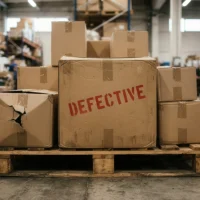
When a defective product causes a fatal injury, the consequences can extend far beyond the immediate loss of a loved one. Families may be left facing funeral and burial expenses, the loss of financial support, and the loss of the guidance, companionship, and services the deceased provided. At the same time, determining who is legally responsible can be exceptionally complicated when the death involves a defective product.
California product liability law imposes responsibility on manufacturers, distributors, and retailers when a defective product causes injury. Depending on the circumstances, the defect may involve the product’s design, the manufacturing process, or inadequate warnings or instructions. When the injury is fatal, the surviving family members may have a wrongful death claim based on the underlying product liability law.
At Kalfayan Merjanian, LLP, we understand that pursuing a defective-product wrongful death case requires more than identifying the product involved. These cases can require extensive investigation, technical analysis, expert testimony, and determination of every potentially responsible party. Skilled, dedicated, and resourceful legal representation can be critical when a family is seeking accountability from a manufacturer or other powerful corporate defendant.
How Can a Defective Product Cause Someone’s Death?
Defective products can cause fatal injuries in many different ways. A product may fail during ordinary use, lack an important safety feature, contain a manufacturing flaw, or expose consumers to a dangerous risk without adequate warnings. Examples can include automotive defects, such as defective tires, faulty brakes, airbags that fail to deploy properly, or defective seat belts, as well as dangerous machinery, unsafe medical devices, defective pharmaceutical products, electrical products that cause fires or electrocution, and consumer products that create an unreasonable risk of serious injury.
In some cases, the defect is immediately apparent. In others, a product may appear to function normally while containing a hidden defect that only becomes apparent when it fails under particular circumstances.
What Types of Product Defects Can Cause Fatal Injuries?
California recognizes three general categories of product defects that can support strict liability: manufacturing defects, design defects, and warning defects. The California Judicial Council’s jury instructions identify these three categories in CACI No. 1200, and California courts have likewise recognized them as distinct product liability theories.
A manufacturing defect occurs when an individual product differs from its intended design because something went wrong during manufacturing. For example, a critical component might be improperly assembled, weakened, or omitted.
A design defect involves a product that was manufactured according to its intended specifications but is nevertheless unsafe because of the design itself. A product may contain a foreseeable risk that could have been reduced or avoided through a reasonable alternative design.
A marketing defect can arise when a product lacks adequate warnings or instructions concerning a dangerous but foreseeable risk. California law recognizes strict liability claims based on inadequate warnings, although failure-to-warn theories can involve somewhat different considerations depending on whether the claim is based on strict liability or negligence.
Automotive Defects Can Cause Fatal Accidents
Automotive defects can be particularly devastating because a defect can contribute to a high-speed collision or prevent a vehicle’s safety systems from protecting occupants during a crash. Potentially dangerous defects can involve braking systems, steering components, tires, seat belts, airbags, fuel systems, accelerator systems, vehicle structures, electronic systems, or other components. For example, a defective tire could fail while a vehicle is traveling at highway speed, causing the driver to lose control. Similarly, a defective steering component could prevent the driver from properly controlling the vehicle.
A vehicle may also have a crashworthiness defect. In these cases, the issue may not be what caused the collision but whether a defect in the vehicle increased the severity of the occupant’s injuries during an otherwise survivable crash. For example, a seat belt that fails during a collision could increase the severity of an occupant’s injuries.
What Other Defective Products Can Cause Fatal Injuries?
Automobiles are only one category of products that can potentially give rise to a wrongful death claim. Dangerous machinery can cause crushing or amputation injuries. Defective electrical equipment can cause electrocution or fires. A dangerous consumer product can cause a fatal burn, poisoning, or other injury. A defective medical device can malfunction or fail to perform its intended function. Even FDA-approved pharmaceutical products can raise product liability issues when a drug’s risks were inadequately disclosed or when other product-related problems contribute to serious harm. The specific legal theories depend on the product, the circumstances of the injury, the available evidence, and the identity of the parties involved.
Who Can Be Held Responsible for a Defective Product?
The manufacturer is often the defendant, but it may not be the only potentially responsible party. California product liability law can impose strict liability on manufacturers, distributors, and retailers for injuries caused by defective products. The appropriate defendants depend on how the product reached the consumer and what role each business played in bringing the product to market. A case may involve a manufacturer, component manufacturer, distributor, retailer, or other entity within the product’s chain of distribution. Identifying all potentially responsible parties can be particularly important when a corporate defendant attempts to shift responsibility to another company.
What Is Strict Product Liability in California?
Strict liability is significant because a plaintiff does not have to prove that a manufacturer acted negligently in designing or manufacturing the product. Instead, California law holds the manufacturer strictly liable when it releases a defective product on the market and that defect causes injury during a reasonably foreseeable use. This does not mean that every injury involving a product automatically results in liability. The particular requirements depend on the legal theory being asserted, and the plaintiff must establish the necessary connection between the defect and the injury.
How Is a Defective Product Wrongful Death Case Proven?
A fatal product accident can require an investigation that goes considerably beyond reviewing medical records. The product itself is often critical evidence. Attorneys and experts may need to inspect the product, preserve damaged components, photograph evidence, examine manufacturing specifications, review engineering documents, and determine whether the product differed from its intended design. Other important evidence may include maintenance records, purchase information, service records, accident-scene photographs, surveillance footage, vehicle event data, company communications, consumer complaints, product testing, recall information, and regulatory records. The investigation may also need to determine whether the manufacturer or another company knew about similar failures before the death occurred.
Why Is Expert Testimony Important in Defective Product Cases?
Defective product cases can involve highly technical questions that cannot be answered simply by looking at photographs or reviewing an accident report. Engineering experts may need to analyze the product’s design, construction, materials, or failure mechanism. Accident reconstruction experts may be called upon to determine how a defective component contributed to a fatal collision. Automotive experts may be necessary to evaluate vehicle systems and crashworthiness. Medical experts may be instrumental in explaining the nature and cause of the fatal injuries.
In a wrongful death case, economists or other experts may be needed to establish economic losses and the future financial consequences of the decedent’s death. The right experts can help translate complicated technical evidence into understandable conclusions about what failed, why it failed, whether the defect caused or contributed to the death, and the consequences of that failure on the victim’s family.
What If the Manufacturer Says the Product Was Used Incorrectly?
Product manufacturers frequently fight wrongful death product liability claims by questioning whether the product was being used in the manner intended or reasonably anticipated. A manufacturer may argue that misuse, modification, improper maintenance, or another intervening circumstance caused the injury rather than a defect in the product. That makes the evidence surrounding the accident particularly important. The question may not simply be whether the product was used exactly according to the manufacturer’s instructions, but whether the particular use was reasonably foreseeable under the circumstances and whether the alleged defect nevertheless contributed to the fatal injury. The specific defenses available will depend on the facts and applicable product liability theory.
Who Can Bring a Wrongful Death Claim in California?
California’s wrongful death statute, Code of Civil Procedure § 377.60, identifies the people who may assert a wrongful death cause of action. Generally, eligible claimants can include the decedent’s surviving spouse or domestic partner, children, and certain descendants. If there is no surviving issue, the statute allows claims by other persons who would be entitled to the decedent’s property under the state’s intestate succession laws. Certain dependent individuals, including specified parents, stepchildren, putative spouses, and others identified by the statute, may also qualify. A minor who meets the statutory household and dependency requirements may have standing as well.
The statute also permits the decedent’s personal representative to assert the cause of action on behalf of persons entitled to bring it. Because standing is governed by statute, determining who may participate in a wrongful death action can require careful examination of the family’s circumstances.
What Can Families Recover in a California Wrongful Death Case?
California Code of Civil Procedure § 377.61 provides that damages may be awarded as may be just under the circumstances, subject to the statutory framework governing wrongful death damages. Depending on the circumstances, recoverable damages often include the value of financial support the decedent provided or would reasonably have been expected to provide, as well as the value of household services, assistance, advice, training, protection, and companionship.
The economic consequences can be substantial when the person who died was a primary wage earner or provided significant services to the household. The family may have lost not only the person’s current income but also financial benefits and support that reasonably would have continued into the future. California courts have described wrongful death damages as including the financial benefits heirs were receiving at the time of death, those reasonably expected in the future, and the monetary equivalent of the loss of comfort, society, and protection.
Can a Family Recover for the Emotional Grief of Losing a Loved One?
California wrongful death damages contain an important distinction. A wrongful death claim can compensate qualifying survivors for losses associated with the decedent’s relationship with them, including the loss of society, companionship, comfort, and protection. California courts have explained that these damages are intended to compensate the heirs for their own losses.
The statutory wrongful death cause of action is distinct from a claim belonging to the decedent’s estate. Code of Civil Procedure § 377.61 expressly addresses this distinction by providing that wrongful death damages do not include the loss or damage sustained by the decedent before death, including the ability to recover punitive or exemplary damages.
What Happens When a Defective Product Causes a Fatal Car Accident?
Automotive wrongful death cases can present especially complicated product liability questions. Suppose a driver loses control because a tire fails. The investigation may need to determine whether the tire was defectively designed, improperly manufactured, inadequately maintained, or damaged by some other event. Similarly, if an occupant dies after an airbag fails to deploy, the investigation may need to determine whether the airbag system malfunctioned, whether the crash sensors functioned correctly, whether the system’s design was defective, and whether the failure caused or contributed to the fatal injuries. Vehicle manufacturers and their insurers may have substantial resources available to investigate and defend these claims. Preserving the vehicle and relevant components can therefore be critical.
The product itself may contain some of the most important evidence in the case. Once a vehicle is repaired, salvaged, dismantled, or destroyed, evidence concerning the condition of its components may be difficult or impossible to reconstruct. The same principle can apply to machinery, medical devices, consumer products, and other allegedly defective products. Preserving the product can allow qualified experts to conduct a forensic examination and determine whether a defect existed and how it contributed to the fatal injury. This is one reason families should consider obtaining legal representation promptly after a suspected defective product death.
Why Are Defective Product Wrongful Death Cases So Complex?
A defective product wrongful death case may effectively require the family to prove several interconnected propositions. There must be evidence concerning the product itself, the nature of the alleged defect, the conduct of the manufacturer or other parties when relevant, the accident or event that caused the death, and the causal relationship between the defect and the fatal injury. At the same time, the family must establish the damages suffered by the survivors under California’s wrongful death statutes. Corporate defendants, meanwhile, are often well-stocked with sophisticated legal teams, engineers, experts, insurers, and investigators working on their behalf from the earliest stages of a claim. Families deserve representation capable of responding with the same level of preparation and determination.
These cases require considerable resources to pursue. A thorough investigation may require preserving and testing the product, locating witnesses, obtaining corporate and regulatory records, analyzing technical evidence, consulting medical and engineering experts, and reconstructing the accident. There may also be multiple defendants with competing interests. A manufacturer may blame a distributor. A distributor may blame the manufacturer. An automobile company may argue that a component supplier was responsible. An insurer may challenge whether the alleged defect actually caused the death. A skilled, dedicated, and resourceful legal team can pursue these issues while building a case designed to establish both liability and the full extent of the family’s losses.
Contact Kalfayan Merjanian, LLP
Losing a family member because of a defective product can leave survivors facing not only profound personal loss but also difficult questions about how the death happened and who should be held accountable. Product liability cases can involve powerful manufacturers, complicated technical evidence, multiple potentially responsible parties, and substantial financial consequences. Kalfayan Merjanian, LLP brings the skill, dedication, and resources necessary to investigate serious defective-product cases, work with appropriate experts, identify responsible parties, and pursue the compensation available under California wrongful death law. If your loved one died because of a defective product, contact Kalfayan Merjanian, LLP to discuss your case and learn how the firm can help your family pursue accountability.
