
Why Turning Vehicles Cause So Many Serious Pedestrian Accidents
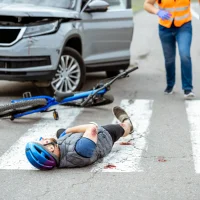
Many people assume that the most dangerous pedestrian accidents occur when a driver is speeding down the roadway or running a red light. In reality, some of the most serious and most common pedestrian collisions happen during ordinary left and right turns at intersections. Drivers who are focused on oncoming traffic, traffic signals, or finding an opening to complete a turn may fail to see a pedestrian lawfully crossing the street until it is too late.
These crashes are often entirely preventable. California drivers have a legal duty to remain alert, yield the right-of-way to pedestrians in crosswalks, and exercise reasonable care to avoid collisions. When a driver fails to meet that duty, an injured pedestrian—or the family of someone killed in a fatal accident—may have the right to pursue compensation through a personal injury or wrongful death claim.
The California pedestrian accident attorneys at Kalfayan Merjanian, LLP, understand why turning movements create such significant risks, how these accidents occur, and why they are frequently the result of driver negligence.
Why Are Turning Vehicles So Dangerous to Pedestrians?
Turning requires drivers to process a tremendous amount of information in a very short period of time. A motorist approaching an intersection may be watching traffic signals, looking for gaps in oncoming traffic, checking mirrors, monitoring adjacent lanes, and planning where to merge after completing the turn. Unfortunately, pedestrians can become an afterthought. Safety researchers sometimes refer to these collisions as “looked-but-failed-to-see” accidents. The driver may briefly glance in the direction of the crosswalk but fail to actually recognize that a pedestrian is present. Unlike another vehicle, a pedestrian occupies a relatively small visual profile and may be obscured by other vehicles, roadside objects, or even the vehicle’s own structural pillars.
Why Left Turns Frequently Lead to Pedestrian Accidents
Left turns present unique hazards because drivers must cross one or more lanes of opposing traffic. Motorists often focus almost exclusively on finding a safe gap between approaching vehicles. Once they identify an opening, they may accelerate through the intersection without checking the crosswalk one final time. This creates a dangerous situation for pedestrians who have begun crossing with the walk signal. Common driver errors contributing to left-turn pedestrian accidents include:
- Focusing on oncoming traffic instead of the crosswalk
- Misjudging the speed of approaching vehicles
- Accelerating quickly to complete the turn
- Failing to account for sun glare or reduced visibility
- Distracted driving
The faster a driver attempts to complete the turn, the less time they have to recognize and respond to someone crossing the street.
Right Turns Can Be Just as Dangerous
Many people assume right turns are less risky because vehicles typically travel at lower speeds. However, right-turn collisions with pedestrians occur frequently. Drivers making right turns on green lights—or where permitted, right turns on red—often direct most of their attention to traffic approaching from the left. While watching for an opportunity to enter traffic, they may overlook pedestrians crossing directly in front of the vehicle. This is particularly common in busy urban intersections where multiple vehicles, bicycles, and pedestrians are moving simultaneously. Drivers should never begin a right turn until they have confirmed that the crosswalk is clear.
Crosswalk Visibility Plays a Critical Role
Crosswalks are intended to improve pedestrian safety, but visibility problems can still contribute to serious accidents. Parked vehicles near intersections, oversized SUVs and pickup trucks, landscaping, utility poles, construction barriers, and other visual obstructions can make pedestrians difficult to see until the last moment. In addition, weather conditions such as rain or fog, along with nighttime driving, can further reduce visibility. However, these conditions do not excuse a driver from exercising reasonable care. On the contrary, they require motorists to slow down, remain alert, and proceed cautiously whenever pedestrians may be present.
California Law Protects Pedestrians at Crosswalks
California law requires drivers to yield the right-of-way to pedestrians crossing within marked crosswalks and within unmarked crosswalks at intersections. Even outside formal crosswalks, motorists have a continuing duty to exercise reasonable care to avoid striking pedestrians. Drivers cannot simply assume the roadway is clear because they have a green light. Traffic signals regulate vehicle movement, but they do not eliminate the obligation to watch for pedestrians who may lawfully be crossing the street. Failure to yield can become compelling evidence of negligence in both personal injury and wrongful death cases.
Intersections Present Multiple Hazards at Once
Intersections are among the most complex driving environments. Drivers must simultaneously monitor:
- Traffic signals and signs
- Adjacent traffic lanes
- Bicyclists
- Other turning vehicles
- Pedestrians in one or more crosswalks
Adding distractions such as cell phone use, navigation systems, conversations with passengers, or fatigue only increases the likelihood that a driver will overlook someone on foot. Many turning collisions occur not because the pedestrian was difficult to see, but because the driver’s attention was divided.
How Fault Is Proven After a Turning Accident
Determining exactly how a turning accident occurred often requires a thorough investigation. Evidence may include surveillance footage, traffic camera recordings, police reports, witness statements, vehicle event data, photographs of the intersection, and accident reconstruction analysis. Investigators may also examine whether the pedestrian had the walk signal, whether the driver violated traffic laws, how fast the vehicle was traveling, and whether distraction or impairment contributed to the collision. The goal is to reconstruct the sequence of events and determine whether the driver exercised the level of care required under California law.
Insurance Companies Often Try to Shift Blame
Even when a pedestrian is struck in a crosswalk, insurance companies may attempt to reduce their financial responsibility. Common arguments include alleging that the pedestrian entered the crosswalk too suddenly, was distracted by a cell phone, crossed against the signal, or wore dark clothing that made them difficult to see. California follows a comparative negligence system, allowing fault to be divided between both parties. However, these arguments frequently overlook the driver’s continuing duty to maintain a proper lookout before and during every turn. A careful investigation often reveals that the collision could have been avoided had the driver simply looked for pedestrians before proceeding. An experienced pedestrian accident attorney will know how to counter arguments from the other side that attempt to pin blame for the collision on the pedestrian.
Serious Pedestrian Injuries Can Have Lifelong Consequences
Turning vehicles may be traveling more slowly than vehicles on highways, but they can still cause devastating injuries. Pedestrians commonly suffer traumatic brain injuries, spinal cord injuries, multiple fractures, internal organ damage, severe orthopedic injuries, and permanent disabilities. Recovery may require emergency surgery, lengthy hospitalization, rehabilitation, and ongoing medical treatment. In fatal cases, surviving family members may be able to pursue a wrongful death claim for the financial and personal losses resulting from the death of their loved one.
How Kalfayan Merjanian, LLP Helps Pedestrian Accident Victims in California
At Kalfayan Merjanian, LLP, we understand that turning-vehicle pedestrian accidents often involve complicated questions about visibility, right-of-way, and driver negligence. Our firm conducts detailed investigations, preserves critical evidence, works with accident reconstruction professionals when appropriate, and aggressively challenges insurance company attempts to shift blame onto injured pedestrians. If you or a loved one has been injured in a pedestrian accident caused by a turning vehicle, or if your family has lost someone in a fatal collision, contact Kalfayan Merjanian, LLP, to learn more about your legal rights and how we may be able to help.
