
Orthopedic Experts in Catastrophic Injury Litigation
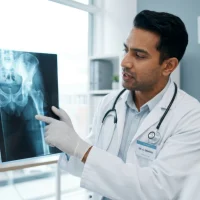
Catastrophic injuries can change virtually every aspect of a person’s life. A severe fracture, spinal injury, joint injury, traumatic amputation, or other orthopedic injury may require multiple surgeries, extensive rehabilitation, assistive devices, and long-term medical care. Even when treatment has stabilized, an injured person may continue to experience pain, restricted mobility, loss of strength, or permanent limitations.
For these cases, understanding the medical consequences of an injury is essential to understanding the full scope of a personal injury claim. Kalfayan Merjanian, LLP represents people who have suffered catastrophic injuries in California and works with orthopedic experts and other medical professionals as needed to develop the evidence necessary to establish the nature of an injury, its relationship to an accident, the treatment that may be required, and its long-term effects.
An orthopedic expert does more than identify a diagnosis. In appropriate cases, the expert can help translate medical records and imaging studies into a clear explanation of what happened to the injured person’s body and what those injuries may mean for the future.
What Does an Orthopedic Expert Do in a Catastrophic Injury Case?
Orthopedic experts are physicians whose practice focuses on the musculoskeletal system, including bones, joints, muscles, ligaments, tendons, and related structures. Depending on the injury, an orthopedic surgeon or another appropriately qualified orthopedic physician may evaluate the patient’s medical history, diagnostic imaging, surgical records, physical limitations, and treatment history.
In litigation, the expert’s role is to provide opinions within the scope of the expert’s medical knowledge and qualifications. The expert may review medical records, imaging studies, operative reports, rehabilitation records, and other evidence before forming opinions about the injury and its consequences.
The precise role depends on the facts of the case. An orthopedic expert may address whether an accident caused or contributed to an injury, whether surgery was reasonably necessary, whether additional treatment may be required, and whether an injury is expected to produce permanent impairment or limitations.
California’s courts recognize the importance of qualified expert testimony when specialized medical knowledge is necessary to establish issues involving medical causation and the nature of an injury. The state’s civil jury instructions, for example, distinguish among different types of medical expert testimony and recognize standards applicable to medical specialists.
How Can an Orthopedic Expert Establish the Nature of an Injury?
A catastrophic orthopedic injury may involve considerably more than the initial diagnosis.
Consider a person who suffers a complex fracture in a motor vehicle collision. The medical record might identify the fracture and document surgery, but the orthopedic expert can provide additional context concerning the location and severity of the fracture, the structures affected, the treatment performed, and the anticipated consequences.
The expert may review X-rays, CT scans, MRIs, and other diagnostic studies to evaluate the injury. Surgical records can provide information about the procedures performed and the condition of the injured structures when the surgeon operated.
This analysis can help explain why an injury required extensive treatment and why symptoms may continue even after the initial fracture has healed.
The distinction can be particularly important when a defendant argues that an injury was minor, temporary, or unrelated to the accident. Medical evidence can provide a more complete picture of the physical damage and its consequences.
Can an Orthopedic Expert Connect an Injury to an Accident?
Causation can become a significant issue in catastrophic injury litigation.
A defendant or insurance company may argue that the injured person had a preexisting condition, that a particular injury resulted from an earlier accident, or that the current symptoms are unrelated to the incident at issue. These arguments can become particularly important when a person had a history of back, neck, joint, or other orthopedic problems before the accident.
An orthopedic expert can review the person’s medical history before and after the accident and evaluate whether the available evidence supports a causal relationship.
That does not mean the expert simply assumes that every medical problem appearing after an accident was caused by it. A meaningful medical opinion should consider the patient’s prior condition, the mechanism of injury, the timing of symptoms, diagnostic findings, treatment history, and other relevant information.
For example, an individual may have had occasional back pain before a collision but then develop a significantly different pattern of symptoms after the crash, followed by imaging that reveals a new disc injury and surgery. The medical history before and after the accident may be important to determining whether the collision caused a new injury or aggravated an existing condition.
What Role Does Medical Imaging Play?
Diagnostic imaging can be particularly important in catastrophic orthopedic injury cases because it provides objective evidence of physical damage.
X-rays may reveal fractures or dislocations. CT scans can provide more detailed information about complex fractures. MRI studies can help identify damage to discs, cartilage, ligaments, tendons, and other soft tissues.
An orthopedic expert can interpret these studies in conjunction with the clinical record. The expert may compare imaging taken before and after an accident when prior studies are available.
This can be especially useful in cases involving allegations of a preexisting condition. Comparing earlier and later imaging may provide information about whether an accident resulted in a new structural injury or materially changed an existing condition.
The expert’s analysis may also help explain medical terminology that can otherwise be difficult for jurors to understand. A radiology report may identify a particular abnormality, but the significance of that finding in the context of the patient’s symptoms and functional limitations may require additional medical explanation.
How Can an Orthopedic Expert Address Surgery Issues?
Catastrophic orthopedic injuries frequently involve surgery, sometimes more than one procedure.
An orthopedic expert may explain why surgery was performed, what the procedure was intended to accomplish, and what the patient’s condition was at the time of surgery. The expert may also evaluate whether additional surgery or other medical treatment may reasonably be expected.
This can be significant when determining future medical expenses.
For example, an accident victim may undergo surgery to repair a severely damaged joint but face an increased risk of arthritis or the eventual need for joint replacement. The fact that the person has completed the initial surgery does not necessarily mean that the medical consequences of the injury have ended.
An orthopedic expert can explain the medical basis for anticipated treatment and distinguish reasonably foreseeable care from speculative possibilities.
Can an Orthopedic Expert Explain Permanent Impairment?
Some catastrophic injuries result in permanent physical limitations.
An orthopedic expert may evaluate whether an injury has reached a point at which its long-term consequences can be assessed. The expert may discuss limitations involving range of motion, strength, stability, weight-bearing, lifting, walking, standing, or other physical activities.
The nature of the impairment will depend on the injury.
A spinal injury, for example, may affect mobility and physical tolerance in ways that are very different from a severe knee or shoulder injury. A complex fracture involving a weight-bearing joint may produce long-term limitations even after surgical repair. An amputation creates an entirely different set of medical and functional issues.
An expert’s testimony can help establish that an injury is not merely a temporary inconvenience but may continue to affect the person’s physical capabilities for years or throughout the person’s lifetime.
How Do Orthopedic Experts Help Establish Future Medical Needs?
Future medical treatment can represent a substantial component of damages in a catastrophic injury case.
The need for future treatment may include additional surgery, follow-up care, physical therapy, diagnostic imaging, injections, prescription medication, durable medical equipment, or other treatment. The specific needs depend on the injury and the patient’s expected course of recovery.
An orthopedic expert can provide a medical foundation for determining what future treatment is reasonably anticipated.
For example, if an accident victim has undergone a procedure that is not expected to last indefinitely, the expert may explain why a future revision or replacement procedure may be medically appropriate. Similarly, an individual with permanent joint damage may require periodic treatment to manage symptoms and maintain function.
Medical testimony can help distinguish reasonably anticipated future care from possibilities that are too uncertain to support a damages claim.
What About Physical Therapy and Rehabilitation?
Orthopedic experts may also consider the rehabilitation process when evaluating a catastrophic injury.
Physical therapy and occupational therapy records can document the patient’s progress, ongoing limitations, pain levels, strength, range of motion, and ability to perform ordinary activities.
An orthopedic expert may review this information alongside surgical records and imaging studies to understand how the patient responded to treatment.
The rehabilitation history can also provide evidence concerning whether an injury has resulted in lasting limitations. Someone who continues to require therapy months after an accident may have a different prognosis from someone who quickly returns to normal function.
Other professionals may also contribute to this analysis. Depending on the case, a life-care planner, vocational expert, physical therapist, occupational therapist, or other professional may address aspects of the injury that fall outside the orthopedic physician’s role.
How Does an Orthopedic Expert Work With Other Experts?
Catastrophic injury litigation often requires a multidisciplinary approach.
An orthopedic surgeon may explain the physical injury and medical treatment. A life-care planning expert may use the medical evidence to develop an assessment of future care needs. A vocational expert may evaluate how physical limitations affect the person’s ability to perform work. An economist may analyze future medical expenses or lost earning capacity.
These opinions can complement one another.
For example, the orthopedic expert may establish that a person’s knee injury is permanent and will likely require future treatment. A life-care planner may then determine the types and frequency of medical services that may be required. A vocational expert may evaluate whether the person’s physical limitations prevent a return to the person’s prior occupation.
The attorney’s role is to bring this evidence together into a coherent presentation supported by the medical and factual record.
What If the Defendant Claims the Injury Was Preexisting?
Preexisting conditions are a common issue in serious injury litigation.
A defendant may contend that the plaintiff’s symptoms were caused by an earlier injury or degenerative condition rather than the accident. That does not necessarily end the inquiry. The relevant medical question may include whether the accident caused a new injury or aggravated an existing condition.
The medical records before the accident can therefore become particularly important.
If prior imaging, physician visits, or treatment records exist, an orthopedic expert may compare the person’s condition before the accident with the condition afterward. The expert may consider changes in symptoms, diagnostic findings, treatment, and physical function.
This comparison can help the jury understand the difference between a preexisting condition and the additional harm caused by the accident.
Why Is the Timing of an Orthopedic Evaluation Important?
A catastrophic injury case can evolve over time.
Immediately after an accident, doctors may be focused on emergency treatment and preventing further damage. Additional injuries may become apparent as swelling decreases, surgical repairs heal, and the patient begins rehabilitation. Some long-term complications may not become clear until months later.
This does not mean that families should simply wait to investigate a claim. Evidence should be preserved promptly even when the patient’s ultimate medical prognosis remains uncertain.
The California court system advises personal injury plaintiffs to preserve evidence such as photographs, medical bills, doctor reports, witness statements, and police reports. The courts also note that cases involving severe injuries or potentially permanent disability can require particular attention to the extent of damages.
An attorney can work with the treating physicians and appropriate experts as the medical picture develops rather than attempting to make a final assessment based solely on the earliest records.
How Can Orthopedic Testimony Affect a Catastrophic Injury Claim?
An orthopedic expert’s testimony can help connect several parts of a catastrophic injury claim: the accident, the physical injury, the treatment, the prognosis, and the long-term consequences.
That connection can be particularly important when an injury is complex. A jury may understand that someone suffered a broken bone or underwent surgery, but the legal significance of the injury can depend on what those medical facts mean for the person’s future.
Will the person regain normal function? Is another surgery likely? Will the person experience permanent pain or reduced mobility? Will the injury restrict physical activities? Is the person likely to require ongoing medical care?
These are medical questions that may require qualified medical testimony.
The strength of an expert opinion ultimately depends on the facts, the expert’s qualifications, the medical evidence reviewed, and the reasoning supporting the conclusions. An orthopedic expert is one component of a broader litigation strategy, not a substitute for the underlying medical records and other evidence.
Building the Medical Evidence in a California Catastrophic Injury Case
Catastrophic injury litigation requires a thorough understanding of both the immediate injury and its long-term consequences. Orthopedic experts can provide valuable medical evidence concerning the nature and severity of musculoskeletal injuries, the relationship between an accident and an injury, necessary treatment, future medical needs, and permanent physical limitations.
That evidence may be particularly important when a defendant disputes causation, argues that an injury was preexisting, challenges the necessity of surgery, or minimizes the likelihood of future medical problems.
Kalfayan Merjanian, LLP understands that catastrophic injuries require more than documenting the medical bills that have already been incurred. Building a claim may require developing medical testimony that explains how an injury occurred, what treatment was necessary, what limitations remain, and what the injured person may face in the future. If you or a family member has suffered a catastrophic orthopedic injury because of someone else’s negligence in California, contact Kalfayan Merjanian, LLP to discuss the circumstances of the injury and your potential claim.
