
How Dash Cameras Are Changing Personal Injury Cases
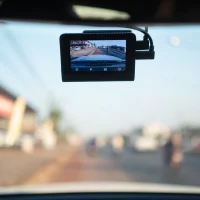
A car accident can happen in seconds. Afterward, the drivers involved may remember the collision differently, witnesses may disagree about what they saw, and an insurance company may argue that its policyholder was not responsible. Without objective evidence, determining what actually happened can become a battle of competing accounts.
Dash cameras are changing that dynamic. A properly preserved dash camera recording can show what happened immediately before, during, and after a collision, sometimes providing evidence that would otherwise be impossible to reconstruct. For people seriously injured in car accidents, truck collisions, pedestrian crashes, and bicycle accidents, video can become an important part of establishing liability.
At Kalfayan Merjanian, LLP, our California car accident injury lawyers recognize the value of objective evidence in serious personal injury cases. Dash-camera footage is not automatically conclusive, and it does not replace a thorough accident investigation. But when reliable footage exists, it can provide a powerful way to test drivers’ statements, identify dangerous conduct, and establish the sequence of events.
Why Can Dash Camera Footage Be So Important After an Accident?
Traditional accident investigations may rely on police reports, photographs, witness statements, vehicle damage, skid marks, and the recollections of the people involved. Those sources remain important, but each has limitations.
A driver’s memory may be affected by the stress of the collision. A witness may have seen only part of the accident. A police officer may arrive after the vehicles have moved or after physical evidence has changed.
A dash camera can provide something different: a contemporaneous visual record of the roadway and surrounding traffic.
Depending on the camera and its positioning, footage may show vehicles changing lanes, running a red light or stop sign, following too closely, turning across another vehicle’s path, braking suddenly, or striking a pedestrian or bicyclist. It may also capture weather, traffic, visibility, and roadway conditions immediately before the crash.
That can make the difference between a disputed account and evidence that allows investigators to see what occurred.
How Can Dash Cameras Help Prove Who Caused a Crash?
Consider a collision in which one driver claims the other suddenly swerved into the driver’s lane. Without video, investigators may have to compare those accounts against vehicle damage, roadway evidence, and witness testimony.
A dash camera recording might show whether the vehicle actually changed lanes, how long the maneuver took, whether a turn signal was used, and what the other driver was doing immediately beforehand.
Similarly, a driver may claim that a traffic signal was green when the collision occurred. Video from another vehicle may capture the signal or surrounding traffic closely enough to provide evidence concerning which driver had the right of way.
A recording may also reveal conduct that was difficult to identify from the accident scene alone, such as distracted driving, unsafe passing, aggressive driving, or a failure to stop.
California courts advise parties in civil cases to preserve evidence supporting their claims and identifies photographs, witness statements, police reports, and other materials as potentially important evidence in personal injury cases. Dash camera footage can add another contemporaneous source of evidence to that investigation.
Can Dash Cameras Help When There Are No Independent Witnesses?
One of the most significant advantages of a dash camera is that it may provide evidence even when nobody else stopped to witness the crash.
This can be especially important on highways, rural roads, parking lots, and other locations where an accident may happen without nearby pedestrians or other witnesses.
A driver who has a dash camera may be able to preserve the recording and provide it to an injured person’s attorney or to law enforcement. In some circumstances, another motorist who happened to be driving behind or approaching the collision may have captured the event even though that person was not directly involved.
That footage can potentially establish facts that would otherwise depend on the memories of the drivers involved.
How Can Dash Cameras Help in Hit-and-Run Accidents?
Dash camera footage can be particularly valuable in a hit-and-run investigation.
A recording may capture the fleeing vehicle’s license plate, make, model, color, distinguishing features, direction of travel, or driver. Even when the license plate is not clearly visible, footage showing a vehicle’s characteristics can provide investigators with useful leads.
In a serious injury case, the footage may also establish how the collision occurred. A driver who leaves the scene may later claim that no contact occurred or that the victim was responsible. Video can potentially provide evidence that contradicts those claims.
The sooner potentially useful footage is identified and preserved, the better. Many dash cameras record continuously and automatically overwrite older files once available storage is exhausted. A recording that exists today may not exist several days later.
Dash Cameras Can Show More Than the Moment of Impact
The seconds leading up to a crash may show whether a driver was accelerating, braking, weaving between lanes, following too closely, or approaching an intersection at an unsafe speed. The footage may also show traffic congestion, weather, glare, road construction, or another condition that affected the circumstances of the accident.
The aftermath may also matter. A recording could show where vehicles stopped, what the drivers said or did immediately afterward, or whether another vehicle left the scene.
A complete recording can therefore provide context rather than merely a few seconds showing the impact.
Can Insurance Companies Dispute Dash Camera Footage?
Video evidence may be powerful, but an insurance company or defense attorney can still question what a recording actually proves.
The defense may argue that the camera did not capture the entire event, that the angle obscures an important detail, that the footage does not establish speed, or that conditions outside the camera’s field of view were relevant.
The authenticity and completeness of the recording can also become issues. Was the file obtained directly from the camera? Has it been edited? Does the file contain the complete recording? Is the timestamp accurate? Is there audio, and is that audio relevant or subject to separate legal issues?
These questions do not necessarily undermine legitimate footage. They demonstrate why preserving the original recording and documenting how it was obtained can be important.
Can Dash Camera Footage Be Used in Court?
Dash camera footage can be powerful evidence in a trial, but a recording still has to satisfy the applicable rules of evidence.
California courts explain that exhibits, including videos and photographs, do not simply become evidence because a party possesses them. The court must determine whether the requirements for admission have been satisfied.
California’s rules also contain specific procedures concerning electronic sound and sound-and-video recordings offered at trial. Rule 2.1040 addresses requirements for certain electronic recordings, including providing opposing parties with a duplicate and, in applicable circumstances, a transcript.
That does not mean every dash camera recording requires the same procedure in every case. The admissibility of particular footage depends on the circumstances, including what the recording shows, how it was preserved, and the purpose for which it is being offered.
An attorney can determine how the footage should be preserved, disclosed, authenticated, and presented.
Why Is It Important to Preserve the Original Dash Camera File?
A dash camera owner should preserve the original recording rather than relying only on a shortened clip or a video uploaded to social media.
Editing can unintentionally remove context. Compression can affect image quality. Converting a file to another format can alter metadata. And simply continuing to use the camera may cause the device to overwrite the original recording.
Preservation may include saving the native file, retaining the original storage device when appropriate, and making verified copies for review. An attorney may also seek related footage from other vehicles or businesses that have cameras covering the accident scene.
Preserving the original evidence helps establish where the recording came from and reduces unnecessary disputes over whether it has been altered.
What Other Evidence Can Be Compared With Dash Camera Footage?
The strongest accident investigations typically compare video evidence with other sources rather than treating the video as the entire case.
Investigators may compare footage against vehicle damage, photographs, tire marks, accident scene measurements, witness statements, traffic signal timing, medical records, and available vehicle data.
For example, a video may show one car braking immediately before a collision, while physical evidence helps establish the location of the vehicles and the direction of impact. Medical evidence can then address whether the forces involved are consistent with the injuries suffered.
This corroboration can be particularly valuable in catastrophic injury cases, where the defense may challenge both liability and the severity or cause of the plaintiff’s injuries.
What Should You Do If You Believe a Dash Camera Recorded Your Accident?
Tell your attorney or the investigating authorities about the potential footage as soon as possible. If you have access to the camera, preserve the recording rather than assuming someone else has saved it.
If another driver appears to have captured the accident, try to identify that person and obtain contact information when it can be done safely. Businesses near an intersection or roadway may also have surveillance cameras that captured part of the event, although those systems may overwrite footage quickly.
An attorney can help identify potentially relevant recordings and take appropriate steps to obtain and preserve them.
How Can Kalfayan Merjanian, LLP Use Dash Camera Evidence in a Serious Injury Case?
At Kalfayan Merjanian, LLP, we understand that serious personal injury cases often turn on disputed questions about how an accident happened. Dash camera footage can provide an objective perspective that helps us investigate those questions.
We review available video alongside police reports, witness statements, physical evidence, medical records, and other information. When necessary, accident reconstruction professionals can help analyze what the footage shows and compare it with the physical evidence from the crash.
Video can be particularly valuable when representing people who have suffered traumatic brain injuries, spinal cord injuries, amputations, multiple fractures, and other catastrophic injuries. When a person’s life has been permanently changed, establishing an accurate account of how the accident happened is an essential part of pursuing accountability and compensation.
Contact Kalfayan Merjanian, LLP After a Serious Car Accident
Dash cameras are becoming an increasingly important source of evidence in personal injury cases. A recording can capture the moments before a crash, the collision itself, and what happened afterward, potentially answering questions that would otherwise depend on disputed memories.
Kalfayan Merjanian, LLP represents people throughout California who have suffered serious injuries in car, truck, pedestrian, and bicycle accidents. Contact our firm to discuss your accident and learn how we can investigate available video and other evidence to determine what happened and pursue the compensation you may be entitled to receive.
