
How Weather Affects California Car Accident Claims
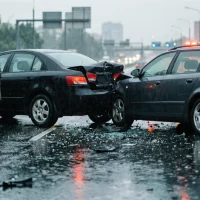
California drivers may have more reason than usual to pay attention to changing weather conditions this fall and winter. A strengthening El Niño is expected to influence California’s weather during the 2026–2027 season, and the National Oceanic and Atmospheric Administration (NOAA) currently projects an increased likelihood of above-normal precipitation across the state. The forecast is particularly concerning along the California coast, and especially in Southern California, which has historically experienced some of the strongest connections between El Niño and increased precipitation.
For drivers in Southern California, Central California, and other areas where heavy rain is less common, periods of unusually wet weather can create a particular hazard. Drivers who are accustomed to dry roads might not be prepared for reduced traction, standing water, hydroplaning, or dramatically reduced visibility. The same is true of drivers who encounter California’s frequent coastal fog.
Bad weather does not absolve a driver of causing a wreck. On the contrary, California law requires motorists to adjust their driving to existing conditions. California Vehicle Code § 22350, known as the basic speed law, prohibits driving at a speed greater than is reasonable or prudent given weather, visibility, traffic, and roadway conditions.
When a driver fails to slow down, increase following distance, or otherwise adapt to hazardous conditions caused by wet weather, that conduct can become important evidence in a California car accident claim. Kalfayan Merjanian, LLP helps injured people who have been hurt in a crash get medical care and compensation from the driver responsible for their injuries.
Why Does Rain Increase the Risk of a California Car Accident?
Rain can affect nearly every aspect of driving. Wet pavement reduces the amount of traction available between tires and the road. Rain can also make it harder to see lane markings, other vehicles, pedestrians, debris, and hazards ahead.
The California Highway Patrol advises motorists to reduce their speed in rainy conditions, increase following distances, and avoid sudden braking or sharp turns. CHP specifically warns that rain-slicked roads can reduce traction and increase the risk of hydroplaning.
The danger can be especially significant when a driver continues traveling at the same speed they would use on a dry road. A posted speed limit is not necessarily a safe speed under every condition. California’s basic speed law expressly requires drivers to consider weather and visibility when determining a reasonable speed.
That distinction can matter after a collision. A driver cannot necessarily avoid responsibility simply by pointing out that they were traveling at or below the posted speed limit. If rain, fog, flooding, or another condition made that speed unsafe under the circumstances, the driver’s failure to adapt may be relevant to determining negligence.
Why Are the First Rains of the Season Particularly Dangerous?
California can go for long periods with little or no rainfall, allowing oil, dirt, dust, and other substances to accumulate on road surfaces. When rain finally arrives, those substances can mix with water and make pavement particularly slippery.
The California Highway Patrol’s driving guidance warns that the first rain following an extended dry period can create especially slippery conditions. CHP explains that rain can mix with dust, dirt, motor oil, and other substances on the roadway, reducing the coefficient of friction between tires and pavement.
This is particularly relevant in parts of California where drivers may not encounter significant rain for months. A motorist who does not recognize the change in road conditions may continue driving too quickly, follow another vehicle too closely, or brake abruptly.
Those choices can contribute to rear-end collisions, intersection crashes, loss-of-control accidents, and multi-vehicle crashes.
What Is Hydroplaning and How Can It Cause a Crash?
Hydroplaning occurs when a layer of water interferes with the tires’ contact with the roadway. Instead of maintaining normal contact with the pavement, the tires can begin riding on water. When that happens, a driver can lose some or all of the ability to steer or brake effectively.
Speed is one factor that can contribute to hydroplaning, but it is not the only one. The amount of water on the road, tire condition, tread depth, tire pressure, and roadway characteristics can all affect the risk.
The California Highway Patrol specifically warns that hydroplaning can occur when water accumulates on the roadway and that worn tire tread can make it more difficult for tires to channel water away from the contact surface.
For a California car accident claim, the circumstances surrounding a hydroplaning collision can therefore be important. Investigators may need to determine how fast the vehicle was traveling, how much water was present, whether the driver had an opportunity to slow down, and whether the vehicle’s tires were properly maintained.
A driver who loses control after encountering water is not automatically negligent simply because hydroplaning occurred. The question is whether the driver acted reasonably under the circumstances.
How Does Fog Affect California Car Accident Claims?
Fog presents a different type of weather-related hazard. Instead of primarily reducing traction, fog can dramatically reduce visibility. This can make it difficult for drivers to see stopped vehicles, pedestrians, road hazards, lane markings, or traffic ahead.
California has many areas where fog can be a recurring problem, including coastal and inland regions. Dense fog can occur along portions of the Central Coast and Bay Area, while other parts of the state can experience tule fog and other localized visibility hazards.
A driver traveling at a speed appropriate for clear weather may be traveling too fast when visibility is severely restricted. California law specifically requires motorists to consider visibility when determining a reasonable and prudent speed.
CHP guidance also warns about the dangers of excessive speed in fog, particularly when a driver’s stopping distance exceeds the distance the driver can see ahead.
This can be especially important in chain-reaction collisions. If a driver cannot see far enough ahead to stop safely, continuing at an unnecessarily high speed can increase the likelihood of striking another vehicle.
Can a Driver Be Negligent for Driving Too Fast in Bad Weather?
Yes. California’s basic speed law directly addresses this issue. Vehicle Code § 22350 states that a person may not drive at a speed greater than is reasonable or prudent while considering weather, visibility, traffic, and the surface and width of the highway. The law also prohibits driving at a speed that endangers people or property.
This means that the relevant question after a weather-related collision is not simply, “Was the driver speeding?” A more complete inquiry may be, “Was the driver’s speed reasonable under the conditions that existed at the time?” For example, 55 miles per hour might be reasonable on a dry freeway with clear visibility but unsafe during heavy rain, dense fog, or when significant water has accumulated on the roadway. Similarly, a driver approaching stopped traffic during a downpour may need substantially more stopping distance than would be necessary on dry pavement.
Weather conditions do not eliminate a driver’s responsibility to operate safely. Rather, they can increase the care that a reasonable driver should exercise.
What Other Weather Conditions Contribute to California Car Accidents?
Heavy rain and fog are not the only weather-related hazards California drivers may encounter. Strong storms can produce standing water, flash flooding, debris, fallen branches, mud, and other obstacles. Wind can also make it more difficult to control a vehicle, particularly for motorcycles, high-profile vehicles, and vehicles towing trailers.
Standing water deserves particular attention because it may be difficult to determine its depth from behind the wheel. Driving through significant water can cause a vehicle to lose traction or become disabled. Flooding can also conceal potholes and other roadway hazards.
Weather can also compound existing road problems. A poorly drained section of roadway may accumulate water more quickly than surrounding pavement. A roadway with inadequate visibility, damaged pavement, or other defects can become even more hazardous during a storm.
When a collision occurs, determining what actually happened may require looking beyond the simple fact that it was raining or foggy.
How Can Weather Evidence Affect a California Car Accident Claim?
Weather can become part of the evidence used to determine how a collision occurred and who may be responsible.
An investigation may examine weather reports, precipitation records, visibility conditions, photographs, surveillance footage, dashcam video, witness statements, police reports, vehicle data, roadway conditions, and the location and severity of vehicle damage. Investigators may also consider whether water was standing on the road or whether a particular roadway was known to present visibility or drainage problems.
The timing of the weather can also matter. A collision occurring shortly after the first significant rain following months of dry conditions may involve different roadway conditions than a collision occurring after hours of sustained rainfall.
Similarly, the presence of fog at the precise time and location of a collision may be more important than a general report that fog existed somewhere in the surrounding area.
Establishing these details can help determine whether a driver’s conduct was reasonable under the circumstances.
Does a Crash in Bad Weather Make a Driver Responsible?
Weather is a condition that drivers must account for; it is not evidence of negligence nor an excuse for an accident.
A driver who loses control because of an unexpected weather condition is not necessarily liable nor free from blame simply because the crash happened during rain or fog. A proper investigation should consider all of the circumstances. If evidence shows that a motorist was traveling too fast for the conditions, following too closely, making unsafe maneuvers, or failing to respond appropriately to reduced visibility or traction, those facts may support a negligence claim.
What Should You Do After a Weather-Related Car Accident?
If you are injured in a crash that occurred during rain, fog, or another hazardous weather condition, seek appropriate medical attention and, when possible, document the circumstances surrounding the accident. Photographs or video of the roadway, standing water, visibility conditions, vehicle damage, and nearby hazards may later help establish what conditions existed.
It is also important to preserve information about the collision, including witness contact information, photographs, medical records, and the police report. Weather conditions can change quickly, so evidence documenting the conditions at or near the time of the crash may be particularly valuable.
Most importantly, do not assume that the presence of bad weather means nobody was responsible for your injuries. Drivers have a duty to adjust their conduct to conditions on the road.
Contact Kalfayan Merjanian, LLP After a California Car Accident
California’s weather can change dramatically from one day to the next, and conditions such as heavy rain, fog, standing water, and reduced visibility can make an otherwise familiar road substantially more dangerous. But bad weather does not excuse unsafe driving. California law requires motorists to account for weather and visibility when determining a safe and reasonable speed.
If you were injured in a California car accident, Kalfayan Merjanian, LLP can investigate the circumstances of the collision, including the driver’s speed, roadway conditions, visibility, vehicle evidence, witness accounts, and available weather information. Contact Kalfayan Merjanian, LLP to discuss your accident and learn more about your legal options.
