
How Accident Reconstruction Helps Serious Injury Cases
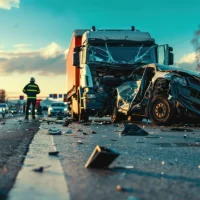
When a serious car, truck, pedestrian, or bicycle accident leaves someone with catastrophic injuries, determining what happened can be more complicated than simply reviewing a police report. Drivers may remember events differently. Physical evidence may be damaged or disappear. A person who suffered a traumatic brain injury or spinal cord injury may not be able to explain what happened. Insurance companies may dispute how the crash occurred or argue that their insured was not responsible.
Accident reconstruction can help fill those gaps. By analyzing physical evidence, vehicle damage, roadway conditions, photographs, electronic data, witness accounts, and other information, a qualified accident reconstruction professional can develop an evidence-based explanation of how a collision occurred. At Kalfayan Merjanian, LLP, we recognize the importance of understanding not only that a serious crash occurred, but precisely how it happened and how the evidence supports liability.
What Is Accident Reconstruction?
Accident reconstruction is the process of analyzing evidence from a collision to determine how the accident occurred. Depending on the circumstances, a reconstruction professional may examine vehicle positions, damage patterns, tire marks, debris, roadway measurements, traffic signals, visibility, vehicle speeds, and the timing of the events leading up to the collision.
The California Highway Patrol recognizes skid and tire marks as important physical evidence in collision investigations. The length of a tire mark, together with factors such as the friction characteristics of the roadway, can sometimes help investigators estimate a vehicle’s speed when the mark was created.
Modern reconstruction can also incorporate electronic information from vehicles and other sources. In some cases, computational modeling can be used to evaluate crash dynamics and injury mechanisms. The National Highway Traffic Safety Administration’s crash investigation program, for example, uses standardized crash-reconstruction methods and, in some cases, computational reconstruction as part of its analysis of injury causation.
Why Is Accident Reconstruction Important in Catastrophic Injury Cases?
The more severe the injuries, the more important it may be to establish a detailed understanding of how the accident happened.
A person who suffers a spinal cord injury, traumatic brain injury, amputation, multiple fractures, or another catastrophic injury may face millions of dollars in medical and other losses over the course of a lifetime. A dispute over whether another driver’s conduct caused the crash can therefore have enormous financial consequences.
Accident reconstruction can help address questions such as:
- How fast was a vehicle traveling?
- When did the driver begin braking?
- Was there enough time or distance to avoid the collision?
- Where was each vehicle located before and during impact?
- What sequence of impacts occurred?
- Could the collision have been avoided?
- Did roadway conditions, visibility, or traffic controls contribute?
- How did the forces generated in the crash contribute to the person’s injuries?
The answers will depend on the available evidence and the particular collision. Reconstruction is not a way to manufacture certainty when the evidence does not support it. Rather, it provides a structured method for analyzing the evidence that exists.
How Can Reconstruction Help in a Serious Car Accident?
In a two-vehicle collision, one of the most important questions may be whether the at-fault driver had sufficient time to recognize a hazard and avoid the crash.
For example, a driver may claim that a vehicle suddenly pulled into the driver’s path, leaving no opportunity to react. A reconstruction professional can examine vehicle speeds, distances, braking marks, impact locations, traffic conditions, visibility, and other evidence to evaluate whether that explanation is consistent with the physical evidence.
Speed can be particularly important. California’s basic speed law requires drivers to operate at a speed that is reasonable and prudent under the circumstances, taking into account conditions such as traffic, weather, visibility, and the roadway. Caltrans also notes that collision history and roadway conditions are considered when establishing speed zones.
A reconstruction analysis may therefore provide evidence relevant not only to a driver’s actual speed, but also to whether the driver’s speed was appropriate for the conditions.
How Does Reconstruction Work in Truck Accidents?
Commercial truck collisions can involve additional complications because of the size and weight of the vehicles, their braking characteristics, blind spots, cargo, and the driver’s operating circumstances.
A reconstruction professional may examine the truck’s braking system, tire marks, vehicle damage, electronic data, roadway grades, cargo characteristics, and the positions of the truck and other vehicles. The analysis may also consider how long the truck driver would have needed to perceive a hazard, react, and stop.
In a collision involving a tractor-trailer and a passenger vehicle, the difference in size and weight can produce catastrophic injuries even when the passenger vehicle is traveling relatively slowly. Establishing how the truck was moving and how the collision occurred can therefore be particularly important when evaluating liability and damages.
A truck accident investigation may also need to examine the driver’s conduct and the trucking company’s potential responsibility. Reconstruction is one component of that broader investigation.
How Can Accident Reconstruction Help in Pedestrian Accidents?
Pedestrian collisions present unique reconstruction questions because the injured person is outside a vehicle and may have little physical protection during the impact.
A reconstruction professional may evaluate the vehicle’s speed, braking, roadway geometry, pedestrian position, lighting, visibility, traffic signals, crosswalks, and the sequence of movements immediately before the crash.
NHTSA has developed specialized pedestrian crash-investigation methods that examine factors such as vehicle speed, pedestrian movement, visibility, impact location, and time to collision.
Speed can be particularly important in pedestrian crashes because higher vehicle speeds generally increase both the frequency of serious pedestrian accidents and the severity of resulting injuries.
California’s rules concerning pedestrians and right-of-way may also become relevant. The California Driver’s Handbook explains that drivers approaching pedestrians crossing a roadway must use caution, reduce speed, or stop as necessary to allow the pedestrian to cross safely.
A reconstruction analysis can help determine whether the driver’s account is consistent with the physical evidence and whether there was an opportunity to avoid the collision.
What Role Does Accident Reconstruction Play in Bicycle Accident Cases?
Bicycle collisions can involve many of the same reconstruction issues as pedestrian accidents, but the bicycle’s movement and interaction with traffic introduce additional considerations.
A reconstruction professional may examine the cyclist’s position on the roadway, the vehicle’s path, speed, braking, lane changes, turning movements, visibility, roadway design, and the point of impact. Damage to the bicycle can provide additional evidence about how the collision occurred.
California has specific rules governing bicycle operation and interactions with motor vehicles, and those rules can become relevant when determining how a collision occurred. Caltrans identifies California Vehicle Code sections 21200 through 21212, among others, as provisions concerning bicycle operation on public roads.
In a serious bicycle collision, however, the existence of a traffic violation does not by itself answer every question about civil liability. The reconstruction should be integrated with witness testimony, physical evidence, medical evidence, and the other facts surrounding the accident.
Can Accident Reconstruction Help When Drivers Give Conflicting Stories?
This is one of the most valuable applications of reconstruction.
After a serious collision, each driver may provide a different account of what happened. One may say the other vehicle was speeding. The other may claim that the first driver suddenly changed lanes. A driver may insist that a pedestrian appeared without warning, while witnesses describe a very different sequence of events.
Physical evidence is not influenced by which driver tells the more convincing story.
Vehicle damage, tire marks, debris, photographs, surveillance footage, vehicle data, roadway measurements, and other evidence may help establish what actually happened. California Highway Patrol specifically identifies physical evidence such as skid marks as useful in collision investigations.
A reconstruction professional can analyze those pieces of evidence together to determine whether a particular account is consistent with the physical facts.
Can Reconstruction Help Determine Whether a Crash Could Have Been Avoided?
In many serious injury cases, the issue is not simply who made contact with whom. The question may be whether the collision could have been prevented.
Reconstruction can examine perception-reaction time, vehicle speed, available stopping distance, braking, steering, road conditions, and the location of the vehicles when a hazard became apparent.
For example, if a truck driver claims there was no opportunity to stop before striking a stopped vehicle, a reconstruction analysis may consider how far the truck traveled from the point when the hazard should reasonably have been visible to the point of impact.
Similar questions can arise in pedestrian and bicycle cases. Did the driver have sufficient time to see the pedestrian or cyclist? Was the driver traveling too quickly to stop safely? Could the driver have changed course or taken another action to avoid the collision?
The answers require careful analysis of the actual facts rather than assumptions about what happened.
Can Reconstruction Help Connect a Crash to Catastrophic Injuries?
Accident reconstruction and medical analysis can sometimes complement one another.
Reconstruction may establish the forces and movement involved in a crash. Medical experts can then evaluate whether those forces are consistent with the injuries suffered.
This can be particularly important when an insurance company argues that an injury was unrelated to the accident or was caused by a preexisting condition. In a catastrophic injury case, the defense may attempt to minimize the significance of the collision or argue that the person’s condition would have occurred regardless of the crash.
NHTSA’s crash injury research illustrates the relationship between crash reconstruction and injury causation analysis. Its research teams combine engineering and crash-investigation methods with medical analysis to study how particular crash dynamics produce injuries.
In an individual injury case, the specific medical and accident evidence must be evaluated by qualified experts.
What Evidence Does an Accident Reconstruction Expert Need?
The quality of reconstruction depends heavily on the available evidence. Important information can include photographs from the accident scene, vehicle damage, police reports, witness statements, surveillance footage, dash-camera video, vehicle event data, roadway measurements, tire marks, debris, traffic-signal information, and weather or visibility conditions.
The sooner this evidence is preserved, the better. Vehicles can be repaired or destroyed. Roadway conditions can change. Surveillance footage may eventually be overwritten. Physical evidence at the scene may disappear.
In a catastrophic injury case, preserving evidence can therefore be an important part of the early investigation rather than something addressed after a dispute has already developed.
When Is an Accident Reconstruction Expert Most Important?
Not every car accident requires formal accident reconstruction. A straightforward collision in which the facts are undisputed may not justify the expense or complexity of retaining a reconstruction expert.
The need becomes more apparent when liability is disputed, the injuries are catastrophic, multiple vehicles are involved, the collision occurred at high speed, the accident involved a truck, pedestrian, or bicyclist, or the physical evidence is inconsistent with the accounts given by the parties.
Reconstruction may also become important when the defendant has retained its own experts or is presenting a technical explanation of the accident. A serious injury case should not necessarily rely on an insurer’s or defense expert’s interpretation of the evidence without independent analysis.
How Can Kalfayan Merjanian, LLP Use Accident Reconstruction in a Serious Injury Case?
At Kalfayan Merjanian, LLP, we understand that catastrophic injury cases require careful investigation of both liability and damages. When accident reconstruction can help establish what happened, we work with qualified professionals to analyze the physical and electronic evidence surrounding the collision.
For car, truck, pedestrian, and bicycle accidents, this may include examining vehicle damage, roadway evidence, photographs, video, witness accounts, electronic data, visibility, speed, braking, and the sequence of impacts. We then consider that evidence alongside medical records and expert opinions concerning the client’s injuries and long-term needs.
Our goal is to build a clear, evidence-based explanation of how the accident happened and why another party should be held responsible. For someone whose life has been permanently changed by a catastrophic injury, establishing the facts accurately can be an essential part of pursuing full and fair compensation.
Contact Kalfayan Merjanian, LLP After a Catastrophic Accident
When a serious accident leaves someone with a traumatic brain injury, spinal cord injury, amputation, multiple fractures, or another catastrophic condition, determining exactly what happened can be critical. A detailed accident reconstruction may provide evidence that helps establish speed, braking, visibility, vehicle positions, reaction time, and whether the collision could have been avoided.
Kalfayan Merjanian, LLP represents people throughout California who have suffered catastrophic injuries in car, truck, pedestrian, and bicycle accidents. Contact our firm to discuss the circumstances of your accident and learn how we can investigate the evidence, work with appropriate experts, and pursue the compensation you need for the long-term consequences of a serious injury.
